A solid work of history, a book that will engage readers from a wide range of disciplines and perspectives, a book that will stand as a significant contribution to the history of medicine. -- Joel Howell, M.D., Ph.D., author of Technology in the Hospital A sensitive study of medical practice at that special moment, early in the twentieth century, when the promise of science to expose and cure hidden disease meant that physician authority was on the rise. Anchored in careful reading of a rich manuscript source, Crenner provides a first-rate analysis of one prominent clinician's private practice within its scientific, social, and cultural context. The author's skills as historian and physician offer surprising new insights into things that we tend to take for granted in present practice of both medicine and history. -- Jacalyn Duffin, President, American Association for the History of Medicine A fascinating study of elite medicine at a pivotal moment. Crenner illuminates the shift to a more self-consciously 'scientific' style of practice, through a finely textured analysis of Richard Cabot's meticulously detailed casebooks. -- Charles E. Rosenberg, Harvard University
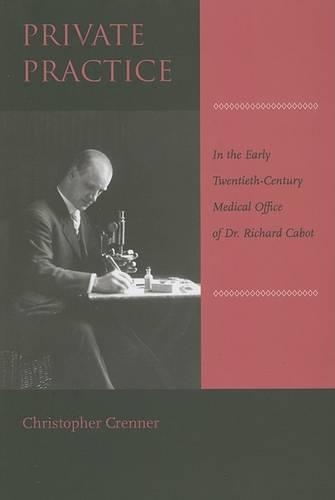
The beginning of the twentieth century marked the rise of advanced medical technologies, allowing doctors to diagnose and treat diseases in new ways. Although American physicians accepted the validity of the new science of medicine, they were sometimes reluctant to trust technology over their professional judgment or intuition. Likewise, patients raised their own suspicions about the new scientific tools, sometimes resisting or contradicting the advice of their physicians. Here Christopher Crenner examines a critical period in medical history, focusing on the office practice of Boston physician Richard Cabot. Intimate epistolary exchanges between Cabot and his patients shed light on the challenges presented by the new technologies-especially their impact on the personal relationships between doctor and patient-providing insight into a time of expanding science and radical change.