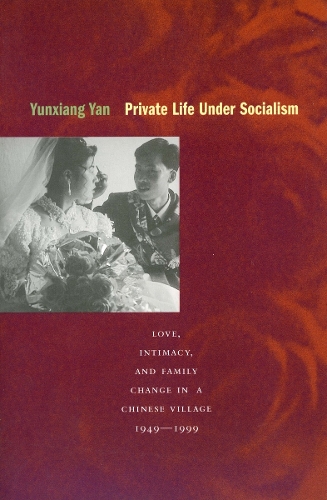
Книга Private Life under Socialism: Love, Intimacy, and Family Change in a Chinese Village, 1949-1999
For seven years in the 1970s, the author lived in a village in northeast China as an ordinary farmer. In 1989, he returned to the village as an anthropologist to begin the unparalleled span of eleven years’ fieldwork that has resulted in this book—a comprehensive, vivid, and nuanced account of family change and the transformation of private life in rural China from 1949 to 1999.
The author’s focus on the personal and the emotional sets this book apart from most studies of the Chinese family. Yan explores private lives to examine areas of family life that have been largely overlooked, such as emotion, desire, intimacy, privacy, conjugality, and individuality.
He concludes that the past five decades have witnessed a dual transformation of private life: the rise of the private family, within which the private lives of individual women and men are thriving.
"The best ethnography of rural China in the 1990s, this important book is about a rarely explored but central dimension of Chinese family life. Yan also places his study of private life directly in the center of classic debates about the character and importance of corporate kinship. It takes years of sharing villagers' lives to see beneath the surface. Yan lived it, and he brings deep understanding to both the narrative and the analysis." - Yale University
"In probably the best micro-examination of Chinese society in transition, Yan goes beyond the three conventional topologies of treating the Chinese family as a cultural, economic, and political unit. His focus on the personal and emotional aspects of Chinese families separates this book from the conventional emphasis on structure and collectivism." - Eastern Washington University
"While the majority of the world views contemporary China as the single most formidable economic force on the planet, threatening to define a new age, anthropologists of China are taking a characteristically contrary approach by studying the deeply personal and emotional social worlds of various Chinese communities . . . Yan directly challenges the entrenched theory of the Chinese family as a corporate enterprise in which the the economic self-interest of the domestic group is the driving force of development." - Anthropological Quarterly
"This may well prove to be the finest rural ethnography of a Chinese village ever written. By focusing on the emotional domain, Yan invites his readers to engage ethnographically in a new domain of scholarly exploration and analysis. In so doing, he has made the Chinese more human. It is a wonderful study." - Las Vegas
"This ethnographic study should be in every academic library." - Library Journal