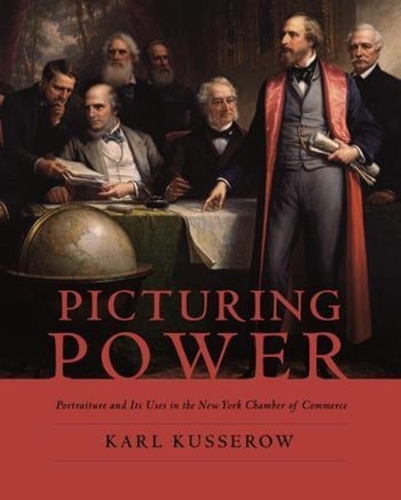
Книга Picturing Power: Portraiture and Its Uses in the New York Chamber of Commerce
Picturing Power is an ambitious, interdisciplinary study of the New York Chamber of Commerce's substantial portrait collection. Picturing Power uses the Chamber's collection as a compelling case study to explore larger questions surrounding art's social production of meaning. The book offers a sophisticated 'portrait' of how high art was used by a wealthy and powerful group of men to fashion an identity that suited their corporate and civic needs. This volume is a significant and welcome addition to the literature on American art and culture. -- Martin A. Berger, professor and chair, History of Art and Visual Culture Department, and associate dean, Arts Division, University of California at Santa Cruz
The almost three hundred portraits that once composed the New York Chamber of Commerce's renowned collection capture the giants of American business with aesthetic and symbolic power. The images of civic leaders and entrepreneurs, carefully assembled over two hundred years, tell the story of American industry as shaped and reflected in the life of a major institution. Interpreting these images as historical documents, Picturing Power traces the establishment, growth, and eventual decline of the nation's most powerful business organization. Lavishly illustrated, this book also charts the social and aesthetic course of institutional portraiture in the United States. From its inception in 1768, the Chamber regulated and codified commercial practice, provided business interests with a unified means of forming and advancing their agendas, and consolidated and elevated the status of its members and their professions. By linking commercial development to social and cultural progress, portraiture did much to support these ends. Whether enhancing, sanitizing, or stabilizing the reputations of business leaders; downplaying their wealth; or whitewashing their questionable practices, portraiture fashioned a public identity that matched corporate and civic needs as they evolved over time. By following changes in the use of these images, Picturing Power reveals the strategies and preoccupations of an American business culture that strove for egalitarian virtue while remaining firmly committed to the principles of competitive capitalism. Americans' shifting and ambivalent relationship to commerce situates these portraits-representations of the human face of business-at the critical intersection of enduring contests in American life, between self-interest and the greater good, between equality and the social hierarchy that wealth engenders.