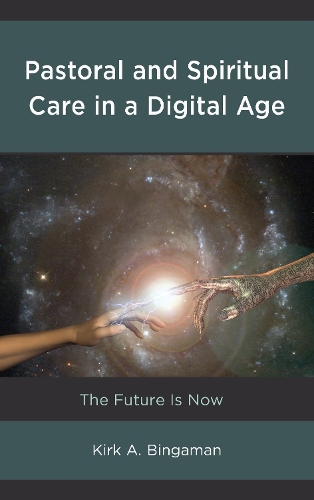
Книга Pastoral and Spiritual Care in a Digital Age: The Future Is Now
Artificial intelligence (AI) is changing what it means to be human. Given our increasing merger with machines, we have therefore entered uncharted territory and an era of unprecedented change. For pastoral and spiritual care providers, religious faith communities, clinical practitioners, and educators, immediate theological reflection is needed, focusing on the potential existential threat and opportunity, and what will constitute human personhood in an age of technological enhancement. Preserving our humanity in a digital age will require intentional focus on strengthening the neural circuitry associated with focused attention, mindful and compassionate awareness, and social and relational intelligence, even as we put to good use the emerging digital technologies.
"Kirk Bingaman has provided us with a helpful introduction to the sobering impact of digital technologies upon human functioning, and his numerous citations of authorities in this field of inquiry are promising for people doing research in this area.... [H]is theological stance accepts technology rather than offering resistance or resignation. He insists we must take modern science seriously as revelatory of a living God and that we can see evolution as the way God delights in creating anew... [and] is antidote for the deleterious effects of digital impingement upon human neurology and interpersonal functioning is mindfulness-based meditation. He calls for pastoral care and counseling to incorporate these techniques and practices.... Bingaman is commended for this thoughtful book that is most valuable for the problems it introduces, for the questions and debate it provokes, for the introduction of mindfulness-contemplative practices, and for the articulation of a creative and constructive pastoral theology that is integrated with practices of his own religious tradition." - Journal of Pastoral Care & Counseling, 73/4 (2019)
"Kirk Bingaman has entered an arena where few pastoral theologians have feared to tread. And yet pastoral theologians and practitioners who work intimately with suffering persons are in a unique position to make critical assessments of the risks and potentials and provide guidance oriented toward healing and wholeness.... Bingaman’s theological claims serve to decenter human beings, and particularly embodied beings, from any pretense of ultimate status in the universe. He rejects a “biocentric” view of our humanity, though he is not willing to replace our embodied existence with the abstract platform of transhumanism. His offer of contemplative meditation in fact draws human beings more deeply into an awareness of their own physical bodies; not simply breath and heartbeat, but movement and emotion.... Like any important book, the value of this volume lies as much in the questions it raises as in the answers it proposes. What, for instance, might human existence look like if technology passes the “tipping point” and machine intelligence makes our major decisions? Will our existence be dictated by disembodied machines, or by the programmers who develop the technologies? Whose interests will be served? What kind of moral frame, if any, might digital devices utilize?... Bingaman [here] offers an important and provocative foray into a most significant area of human evolution, and at a deeply critical time. It is hoped that more pastoral theologians will follow." - Journal of Pastoral Theology, 30/1 (2020)