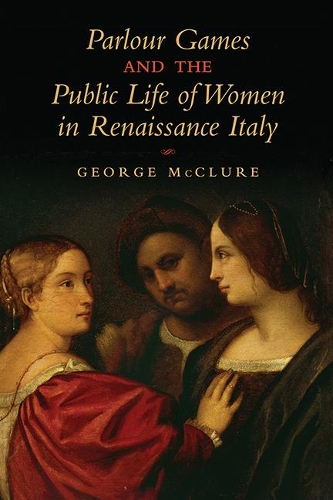
Книга Parlour Games and the Public Life of Women in Renaissance Italy
"Games and game-playing offer a rich window onto the early modern world that is ripe for exploration and analysis. In his examination of this topic, George McClure adds a new facet to our understanding of the intersection of gender, literature, and culture in early modern Italy. With particularly impressive archival research, his study is interesting and engaging." -- Meredith K. Ray, Department of Foreign Languages and Literatures, University of Delaware
Confined by behavioural norms and professional restrictions, women in Renaissance Italy found a welcome escape in an alternative world of play. This book examines the role of games of wit in the social and cultural experience of patrician women from the early sixteenth to the early eighteenth century.
Beneath the frivolous exterior of such games as occasions for idle banter, flirtation, and seduction, there often lay a lively contest for power and agency, and the opportunity for conventional women to demonstrate their intellect, to achieve a public identity, and even to model new behaviour and institutions in the non-ludic world. By tapping into the records and cultural artifacts of these games, George McClure recovers a realm of female fame that has largely escaped the notice of modern historians, and in so doing, reveals a cohort of spirited, intellectual women outside of the courts.
"‘The book helps more richly contextualize when, how, and with what consequences writing by women became a significant presence in Renaissance Italy. Highly recommended.’" - Choice Magazine vol 51:03:2013
"
‘Parlour Games draws out an incredible depth of material around deliberate cultivation of women as public intellectual figures in Siena, and persuasively connects this with the incident of the women on the walls.’
" - Sixteenth Century Journal vol 45:04:2014"
‘McClure’s book furthers our knowledge of women’s agency in the late Renaissance and invites us to consider the diversities that constitute Italy, especially women.’
" - Renaissance Quarterly vol 69:02:2016