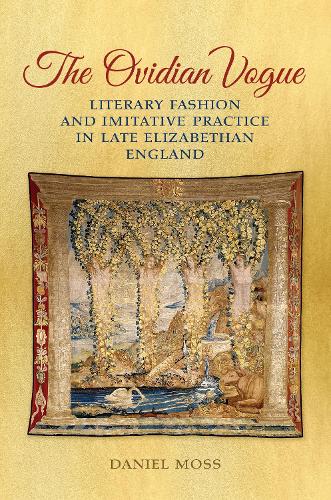
Книга The Ovidian Vogue: Literary Fashion and Imitative Practice in Late Elizabethan England
"Beautifully written, carefully researched, and stunningly original, The Ovidian Vogue makes a significant contribution to English Renaissance studies, especially of the Elizabethan era. The inclusion of Nashe, Chapman, and Drayton with Spenser and Donne is a real boon, giving the study a capaciousness and interest that will make the book invaluable." -- Patrick Cheney, Department of English, Pennsylvania State University "The Ovidian Vogue is an impressive book that makes a strong and new argument in a well-populated field." -- Raphael Lyne, Reader in Renaissance Literature, University of Cambridge
The Roman poet Ovid was one of the most-imitated classical writers of the Elizabethan age and a touchstone for generations of English writers. In The Ovidian Vogue, Daniel Moss argues that poets appropriated Ovid not just to connect with the ancient past but also to communicate and compete within late Elizabethan literary culture.
Moss explains how in the 1590s rising stars like Thomas Nashe and William Shakespeare adopted Ovidian language to introduce themselves to patrons and rivals, while established figures like Edmund Spenser and Michael Drayton alluded to Ovid’s works as a way to map their own poetic development. Even poets such as George Chapman, John Donne, and Ben Jonson, whose early work pointedly abandoned Ovid as cliché, could not escape his influence. Moss’s research exposes the literary impulses at work in the flourishing of poetry that grappled with Ovid’s cultural authority.
"
‘Highly recommended.’
" - Choice Magazine vol 52:07:2015"
‘The Ovidian Vogue explores an impressive range of mostly late Elizabethan narrative poetry and thereby contributes an interesting and valuable argument to the current body of work on Ovidianism in that period.’
" - Renaissance Quarterly vol 68:04:2014"
‘Moss’s study draws careful attention to the curious commingling of Ovidian and anti-Ovidian rhetoric in the era, His deft handling of this rich and promising line of inquiry may well suggest new paths for scholars exploring the character of late Elizabethan Ovidianism.’
" - Sixteenth Century Journal vol46:03:2015"
‘Moss is refreshingly conversant with every text he analyzes in his impressive fashion, original in his ideas and approach while possessed of traditional close-reading skills.’
" - Modern Philology vol 113:04:2016