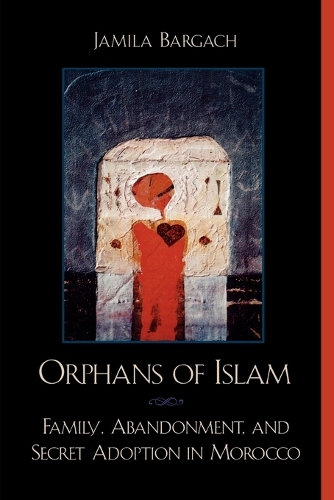
Orphans of Islam portrays the abject lives and 'excluded body' of abandoned and bastard children in contemporary Morocco, while critiquing the concept and practice of 'adoption,' which too often is considered a panacea. Through a close and historically grounded reading of legal, social, and cultural mechanisms of one predominantly Islamic country, Jamila Bargach shows how 'the surplus bastard body' is created by mainstream society. Written in part from the perspectives of the children and single mothers, intermittently from the view of 'adopting' families, and employing bastardy as a haunting and empowering motif with a potentially subversive edge, this ethnography is composed as an intricate, open-ended, and arabesque-like evocation of Moroccan society and its state institutions. It equally challenges received sociological and anthropological tropes and understandings of the Arab world.
"Orphans of Islam succeeds as a combination rich ethnography and sophisticated theoretical analysis. Bargach does an exceptional job of capturing and translating the eloquence of her interlocutors. ...a book that demonstrates the merits of writing anthropology that attends to the local and the global, the textual and embodied, and the ascetics and politics of ethnographic representation." - Anthropological Quarterly
"[Bargach's] book is a vital pioneering foundation that could continue to affect social change. I hope that she will continue and others will build and apply this information, bringing society to a higher level and these victims of society closer to social justice and to the basic human dignity of belonging and connection that every person deserves." - International Journal of Middle East Studies