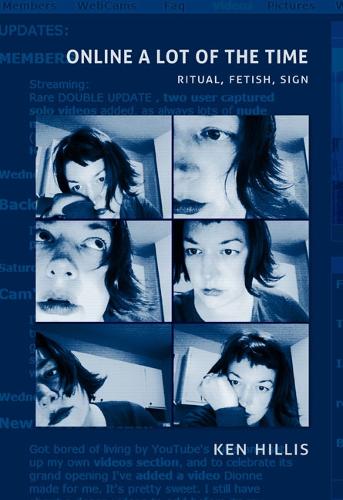
Книга Online a Lot of the Time: Ritual, Fetish, Sign
A theorization of how rituals that would formerly have required participants to gather in one physical space are reformulated for the Web
A wedding ceremony in a Web-based virtual world. Online memorials commemorating the dead. A coffee klatch attended by persons thousands of miles apart via webcams. These are just a few of the ritual practices that have developed and are emerging in online settings. Such Web-based rituals depend on the merging of two modes of communication often held distinct by scholars: the use of a device or mechanism to transmit messages between people across space, and a ritual gathering of people in the same place for the performance of activities intended to generate, maintain, repair, and renew social relations. In Online a Lot of the Time, Ken Hillis explores the stakes when rituals that would formerly have required participants to gather in one physical space are reformulated for the Web. In so doing, he develops a theory of how ritual, fetish, and signification translate to online environments and offer new forms of visual and spatial interaction. The online environments Hillis examines reflect the dynamic contradictions at the core of identity and the ways these contradictions get signified.
Hillis analyzes forms of ritual and fetishism made possible through second-generation virtual environments such as Second Life and the popular practice of using webcams to “lifecast” one’s life online twenty-four hours a day, seven days a week. Discussing how people create and identify with their electronic avatars, he shows how the customs of virtual-world chat reinforce modern consumer-based subjectivities, allowing individuals to both identify with and distance themselves from their characters. His consideration of web-cam cultures links the ritual of exposing one’s life online to a politics of visibility. Hillis argues that these new “rituals of transmission” are compelling because they provide a seemingly material trace of the actual person on the other side of the interface.
"“[A] rich volume in theory and striking examples about the virtual phenomena of avatars, webcam personas, rituals, fetish and signs. It’s a must read for everyone interested in the field of virtuality. A book that has grabbed the fullest of my interest due to my own personal interest in the virtual phenomena of avatars, the rituals in play and the digital ‘body’. . . . So this book is a keeper, you should try it!”" - Masters of Media
"“[A] strong contribution to the sociological study of communications technologies: the location of online interactions within broader socio-historical context and cultural theory. . . ." - Contemporary Sociology
"“[A]n expert account of online relations in general and the relation of user (or participant, in Hillis’ terms) to avatar in particular. . . . As a trans-disciplinary work it will be a valuable resource for those working in a wide range of fields, such as media theory, cultural studies, sociology and philosophy. . . . [A]lways an interesting, provocative and insightful read. This is a fascinating account of life online.”" - Continuum
"“Hillis provides a rich and extensive span of academic and cultural references to contextualise his claims. I found this invaluable in providing a framework in which to situate Hillis’s contribution to the field of theory, including work on ritual, fetish, sign and discourses of virtual presence and online identity. . . . This book can be recommended to researchers and enthusiasts interested in online interaction, virtuality and social study, as well as standing out for its succinct and thoughtful exploration of ritual, fetish and sign theory.”" - Media International Australia
"“Ken Hillis has written an engaging philosophical exploration of the dilemmas confronting Euro-Americans when they begin to use online communication. He is intellectually generous to anthropologists and their conceptual impulses, exploring a series of questions that can aid ethnographers interrogating Euro-American media ideologies surrounding new media.”" - American Ethnologist
"“The real strength of the work lies in the sustained historicization of ‘virtual’ life and Hillis’s perspective on the temporalities that are at stake in online life. On these counts, there are some real delights to be found.”" - American Anthropologist