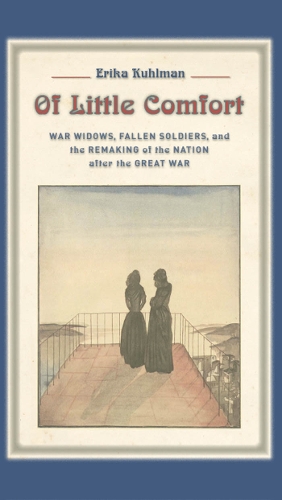
Книга Of Little Comfort: War Widows, Fallen Soldiers, and the Remaking of the Nation after the Great War
Compares the ways in which German and American widows experienced their post-First World War status, and how that played into the cultures of mourning in their two nations
During and especially after World War I, the millions of black-clad widows on the streets of Europe’s cities were a constant reminder that war caused carnage on a vast scale. But widows were far more than just a reminder of the war’s fallen soldiers; they were literal and figurative actresses in how nations crafted their identities in the interwar era. In this extremely original study, Erika Kuhlman compares the ways in which German and American widows experienced their postwar status, and how that played into the cultures of mourning in their two nations: one defeated, the other victorious. Each nation used widows and war dead as symbols to either uphold their victory or disengage from their defeat, but Kuhlman, parsing both German and U.S. primary sources, compares widows’ lived experiences to public memory. For some widows, government compensation in the form of military-style awards sufficed. For others, their own deprivations, combined with those suffered by widows living in other nations, became the touchstone of a transnational awareness of the absurdity of war and the need to prevent it.
"A much-needed account of an overlooked subject that offers a new perspective on the politics of gender in interwar Europe and the United States." - Journal of American History
"Kuhlman's fascinating study reminds us once again of how the Great War marked a new stage in the development of modern politics and the politicization of women's everyday lives." - H-Net Reviews
"Kuhlman compels readers to view women whose husbands were lost to them after the war as more than just victims...Her work adds new depth to understanding how, after the Great War, the often unheard and unnoticed inhabitants of nations carved a new place for themselves by challenging prevailing notions of their place within them. Highly recommended." - CHOICE
"I found this to be a fascinating historical study for the context it provided. It is a history of two societies, but primarily it is a story of women who are often overlooked when the larger stories of war are told." - SAGE Publications
"Eminently readable, Of Little Comfortis sure to become a standard text in university classes dealing with the Great War and military history, women's studies, and 20th century history." - History in Review
"The book will be of value to scholars of transnationalism or students seeking to understand better the complexities of gender and memory post-World War I." - The Historian
"This book by Erika Kuhlman, director of a woman's studies programme at Idaho State University, gives very helpful insights into the situation of women who had lost not only their fiances and husbands as breadwinners, but also some of their social reputation and emotional prospects in life." - European History Quarterly
"Kuhlman uses letters, diaries, popular magazine articles, and correspondence between widows and their governments in the United States and Germany to examine the ways war widows coped with their roles after World War I... The book takes a deep look at the opinions of widows themselves, through their own words, and puts those experiences and struggles into the context of national efforts to define the war for both vanquished and victorious countries, such as using ceremonial mourning for soldiers and the plight of war widows to reinforce their national identity." - Washington State Magazine