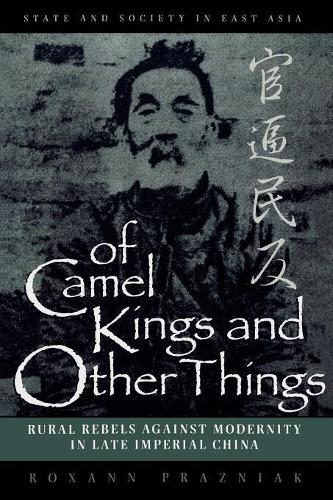
Книга Of Camel Kings and Other Things: Rural Rebels Against Modernity in Late Imperial China
From the perspective of village activists across China, this book tells the stories of farmers and rural laborers who raised the banner of opposition to constitutional reform during the first decade of the twentieth century. The author brings to life the stories of the Camel King of Zunhua county, Qu Shiwen and the Four Mountains of Laiyang county, and many others who criticized government modernization efforts, known collectively as the New Policy. Using county archives—-including oral histories—-as well as memoirs, periodical literature, missionary records, and official documents both Chinese and foreign, Of Camel Kings and Other Things constructs, from fragmented sources, a coherent historical view vital to our understanding of China's twentieth-century crises and the dilemmas of modernity itself.
"This book is an important contribution to the current literature on rural violence in the history of late imperial China. Prazniak has produced a well-researched study of peasant resistance in various parts of early twentieth-century China. Rich in insightful detail, highly readable and informative, this book is destined to become essential reading for those interested in peasant protests and popular uprisings in China and other parts of the world." - Journal Of Parapsychology, April2000
"Makes a positive contribution to understanding peasant protests during the last decade (c. 1900-1910) of Imperial China." - CHOICE
"In the first detailed monograph in English on rural protests against the Qing New Policy state building reforms of 1901–11, Prazniak examines the behavior of many people like the Camel King and reflects on the significance of their collective action. . . . Prazniak offers a wealth of stimulating observations on village social dynamics in her five case studies." - Journal of Asian Studies
"Roxann Prazniak's excellent and pioneering work not only fills a major historical lacuna but does so on the basis of impressive scholarship that includes archives, local gazetteers and oral histories, reports by foreign observers, and a broad array of Chinese and Western secondary sources. Her book is important for specialists on China and should interest everyone who studies popular rebellion." - American Historical Review
"This is an engaging read, which is presented in an original framework." - The Historian
"A valuable contribution to understanding rural politics and peasant rebellion, especially in the modern era." - Journal of Asian and African Studies
"Readers interested in history from the bottom up will find much to like in Roxann Prazniak's new book. A fine study of social history." - The China Journal