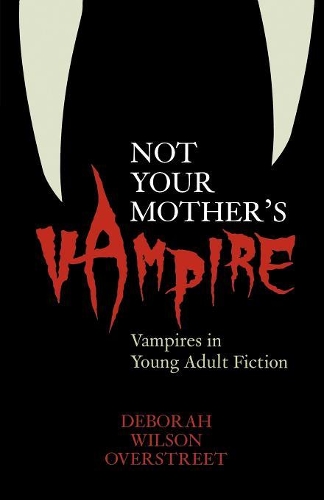
Книга Not Your Mother's Vampire: Vampires in Young Adult Fiction
Examining young adult vampire fiction and how it fits in both the contemporary and classic vampire canon, the book's analysis begins with a primer on vampire scholarship, including a brief deconstruction of ten seminal vampire representations-five literary, five cinematic-and their impact on young adult vampire novels; the evolution of vampires from scary Gothic enemies into postmodern sexualized heroes is traced throughout the book; and the influence of Anne Rice's Vampire Chronicles. Subsequent chapters examine current young adult vampires novels from such popular horror authors as Amelia Atwater-Rhodes, Christopher Pike, R. L. Stine, Darren Shan, and L. J. Smith, and are divided into three categories based on narrative structure: the process of turning into a vampire, humans and vampires trying to find their way in life, and romantic relationships with a vampire partner. Analysis also addresses vampire conventions (the traditions that exist in each vampire universe), vampires and sexuality, and good and reluctant vampires. The human characters who coexist with vampires in these novels receive the same treatment. Additionally, issues of gender, age, and affectional orientation of human and vampire characters are discussed, as are postmodern constructions of good and evil. Not Your Mother's Vampire contains an exploration of Buffy the Vampire Slayer, a television phenomenon, which has sparked an entirely new academic field: Buffy Studies. The vampire characters on Buffy and parallel series, Angel, are explored as are a few main humans (slayers and witches alike). The final chapter of the book is an annotated bibliography of seminal vampire scholarship. As the only in-depth examination of young adult vampire novels in existence, this book is essential for students and scholars of the literature.
"A "closet vampire fan" traces the evolution of vampire stories, Anne Rice's influence, and the vampire as metaphor in ten classic texts from Polidori's "The Vampyre" (1819) to Coppola's 1992 film, Bram Stoker's Dracula. Pointing out the relevance of these archetypes to sexuality, rebellion, and other adolescent issues, Overstreet (elementary education, U. of Maine, Farmington), summarizes and analyzes a sample of the genre specifically for this audience (e.g., Buffy the Vampire Slayer television series). She includes annotated relevant scholarly studies and a comparison chart of elements of the classic versions." - Reference and Research Book News, May 2007
"...interesting reading...." - VOYA, October 2007
"Overstreet evaluates 20 novels, giving plot summaries of each and comparing them to classical ideals of vampires." - School Library Journal, April 2007