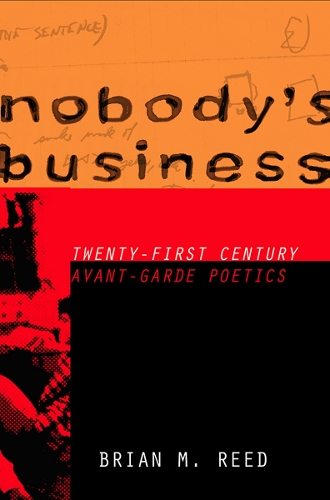
Книга Nobody's Business: Twenty-First Century Avant-Garde Poetics
Since the turn of the new millennium English-language verse has entered a new historical phase, but explanations vary as to what has actually happened and why. What might constitute a viable avant-garde poetics in the aftermath of such momentous developments as 9/11, globalization, and the financial crisis? Much of this discussion has taken place in ephemeral venues such as blogs, e-zines, public lectures, and conferences. Nobody’s Business is the first book to treat the emergence of Flarf and Conceptual Poetry in a serious way. In his engaging account, Brian M. Reed argues that these movements must be understood in relation to the proliferation of digital communications technologies and their integration into the corporate workplace.
Writers such as Andrea Brady, Craig Dworkin, Kenneth Goldsmith, Danny Snelson, and Rachel Zolf specifically target for criticism the institutions, skill sets, and values that make possible the smooth functioning of a postindustrial, globalized economy. Authorship comes in for particular scrutiny: how does writing a poem differ in any meaningful way from other forms of "content providing"? While often adept at using new technologies, these writers nonetheless choose to explore anachronism, ineptitude, and error as aesthetic and political strategies. The results can appear derivative, tedious, or vulgar; they can also be stirring, compelling, and even sublime. As Reed sees it, this new generation of writers is carrying on the Duchampian practice of generating antiart that both challenges prevalent definitions or art and calls into question the legitimacy of the institutions that define it.
Since the turn of the new millennium English-language verse has entered a new historical phase, but explanations vary as to what has actually happened and why. What might constitute a viable avant-garde poetics in the aftermath of such momentous developments as 9/11, globalization, and the financial crisis? Much of this discussion has taken place in ephemeral venues such as blogs, e-zines, public lectures, and conferences. Nobody's Business is the first book to treat the emergence of Flarf and Conceptual Poetry in a serious way. In his engaging account, Brian M. Reed argues that these movements must be understood in relation to the proliferation of digital communications technologies and their integration into the corporate workplace.Writers such as Andrea Brady, Craig Dworkin, Kenneth Goldsmith, Danny Snelson, and Rachel Zolf specifically target for criticism the institutions, skill sets, and values that make possible the smooth functioning of a postindustrial, globalized economy. Authorship comes in for particular scrutiny: how does writing a poem differ in any meaningful way from other forms of "content providing"? While often adept at using new technologies, these writers nonetheless choose to explore anachronism, ineptitude, and error as aesthetic and political strategies. The results can appear derivative, tedious, or vulgar; they can also be stirring, compelling, and even sublime. As Reed sees it, this new generation of writers is carrying on the Duchampian practice of generating antiart that both challenges prevalent definitions or art and calls into question the legitimacy of the institutions that define it.
"
[Brian Reed] is a useful, intelligent,and well-read omnivore, able to offer not only incisive and theoretically personable insights but also witty and dynamic writing. Reed is one of the bestmidcareer critics writing about contemporary poetry in a poetics context; hemakes a person extremely eager to follow his work, now and in the future. Thisbook seems to be one cut of a developing careerlong argument, one calf of ahearty glacier.
" - Modern Language Quarterly"
In this radical, engaging critical study, Reed extends the work he did in Phenomenal Reading (2012) by discussing poets widely recognized as formal and linguistic innovators. Innovation and the interface of art and technology, along with sociology and politics, are his subjects.... He writes of 'better appreciat[ing] the sophistication, idiosyncrasy, and value of these oddball contemporary American efforts to find viable poetic strategies for dissent, critique, and utopian dreaming.' Despite what some readers regard as the willy-nilly hodge-podge that is today's poetry, this is a book not of dreaming but of focused attention on what is new.
" - Choice