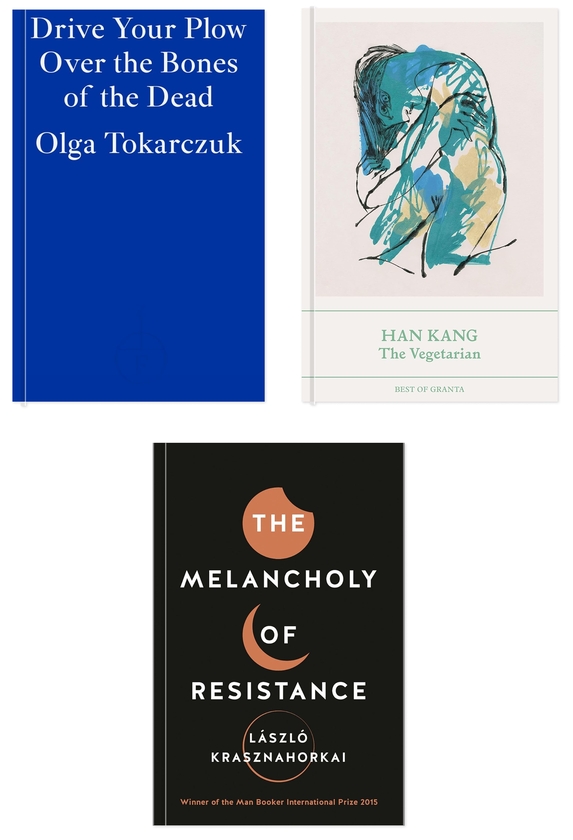



Книга Nobel prize (комплект із 3-х книг)
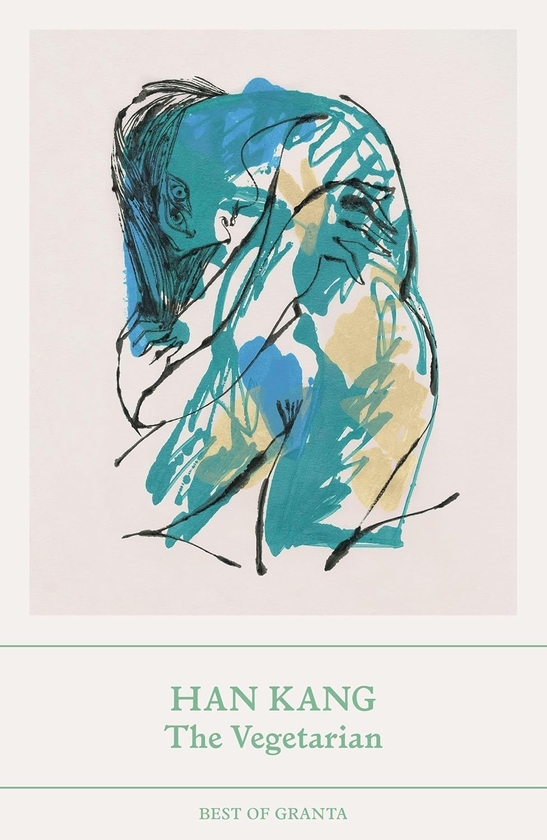
Yeong-hye and her husband are ordinary people - dutiful wife and mild-mannered office worker. One day, prompted by grotesque recurring nightmares, Yeong-hye decides to become a vegetarian. But in South Korea, where vegetarianism is almost unheard-of and societal mores are strictly obeyed, it is a shocking act of subversion.
Yeong-hye's passive rebellion rapidly manifests in ever more bizarre and frightening forms, from sexual sadism to attempted suicide, and in increasingly erotic and unhinged artworks, as all the while she spirals further into her fantasies...
Disturbing and beautiful by turns, The Vegetarian is a revelatory novel about modern day South Korea; a tale of shame, desire and our faltering attempts to understand others.
Книга 2. Drive Your Plow Over the Bones of the Dead
With Drive Your Plow Over the Bones of the Dead, Man Booker International Prize-winner Olga Tokarczuk returns with a subversive, entertaining noir novel. In a remote Polish village, Janina Duszejko, an eccentric woman in her sixties, recounts the events surrounding the disappearance of her two dogs. She is reclusive, preferring the company of animals to people; she’s unconventional, believing in the stars; and she is fond of the poetry of William Blake, from whose work the title of the book is taken. When members of a local hunting club are found murdered, Duszejko becomes involved in the investigation. By no means a conventional crime story, this existential thriller by ‘one of Europe’s major humanist writers’ (Guardian) offers thought-provoking ideas on our perceptions of madness, injustice against marginalized people, animal rights, the hypocrisy of traditional religion, belief in predestination – and caused a genuine political uproar in Tokarczuk’s native Poland.
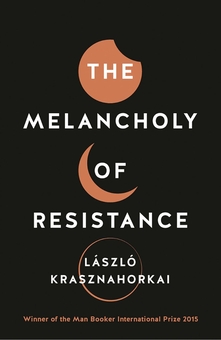
Книга 3. The melancholy of resistance
The Melancholy of Resistance, László Krasznahorkai's magisterial, surreal novel, depicts a chain of mysterious events in a small Hungarian town.
A circus, promising to display the stuffed body of the largest whale in the world, arrives in the dead of winter, prompting bizarre rumours. Word spreads that the circus folk have a sinister purpose in mind, and the frightened citizens cling to any manifestation of order they can find - music, cosmology, fascism.
The novel's characters are unforgettable: the evil Mrs. Eszter, plotting her takeover of the town; her weakling husband; and Valuska, our hapless hero with his head in the clouds, who is the tender centre of the book, the only pure and noble soul to be found.
Compact, powerful and intense, The Melancholy of Resistance, as its enormously gifted translator George Szirtes puts it, 'is a slow lava flow of narrative, a vast black river of type.' And yet, miraculously, the novel, in the words of Guardian, 'lifts the reader along in lunar leaps and bounds.'