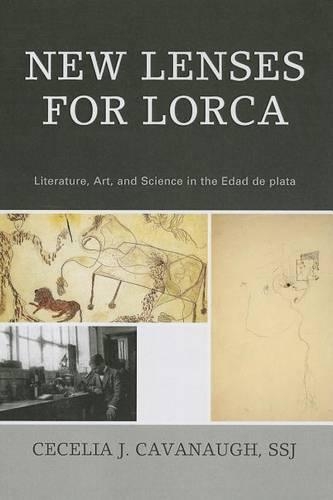
Книга New Lenses For Lorca: Literature, Art, and Science in the Edad de plata
New Lenses for Lorca: Literature, Art, and Science in the Edad de plata examines the influence of science in the thought, creative process, writing, and drawing of Federico García Lorca. This book establishes the historical, cultural, and biographical context in which Lorca encountered scientists and their work, and studies the writing and drawing of scientists he came to know at the Residencia de estudiantes in Madrid. Several of Lorca’s contemporaries who were also exploring science’s possibilities for their work in writing, art, and philosophy, including José Ortega y Gasset, Salvador Dalí, and Gregorio Marañón, are read alongside the poet. By reading particular texts among Lorca’s lectures, letters, poetry, theater, and drawings through the lens of the memoirs, lectures, and drawings of scientists such as Santiago Ramón y Cajal and Pío del Río-Hortega, a working poetics is established for each and comparisons are drawn. References to science in Lorca’s work open a new reading of some of his texts. At the same time, Ramón y Cajal and del Río-Hortega’s drawing and writing are analyzed as plastic and rhetorical works of art. The result is a study of the creative process in artist and scientist alike and their mutual influence.
"This is a beautifully written, tightly argued exploration of the role of science in the work of Federico García Lorca, his poetry, prose, and drawings. Building on the work of Xon de Ros, Paul Julian Smith, Dennis Perri, and Candelas Gala, Cavanaugh (Chestnut Hill College) situates García Lorca within the historical and scientific context of his time—looking at his exposure to study of the human anatomy and physiology and his application of the ideas of Santiago Ramón y Cajal and Pío del Río-Hortega. In these the author discovered new ways to think about literary and pictorial art, and to develop a range of metaphors often described as surreal and naïve. In side-by-side comparison of García Lorca's drawings and theoretical writings with those of Ram^d'on y Cajal and Río-Hortega, Cavanaugh "extract[s] a common poetics," transforming understanding of how, in García Lorca's words (as translated by Cavanaugh) "the inexpressible begins to be expressed." Cavanaugh demonstrates that García Lorca's grasp of fractals expresses his understanding of "this essential relationship between the microscopic and the macroscopic," and transforms his arguments about representational art. This important book adds to understanding not only of García Lorca but also of the intellectual fabric of Madrid in the early decades of the twentieth century. Summing Up: Recommended. All readers." - CHOICE