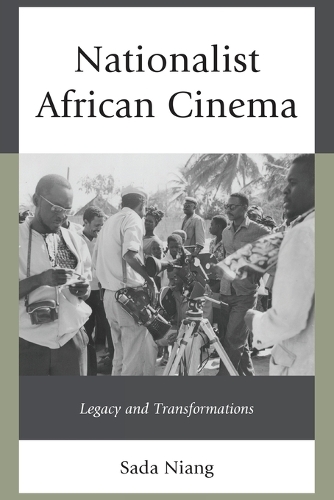
Книга Nationalist African Cinema: Legacy and Transformations
In the last decade, a certain discomfort, at times even impatience emerged among critics of African cinema. The onset of such uneasiness can be traced back to the demise of the liberationist discourse, to the questioning of the monolithic expression “African cinema”, and finally to the critical exploration of various forms of visual narratives developing at a fast speed on the continent. Nationalist African Cinema: Legacy and Transformations reexamines African cinema of the nationalist era within the context of contemporary major Euro-American film trends. It argues that the aesthetic diversification of African cinema can be traced as far back as the nationalist era.
"Niang argues that between 1959 and 1973 African nationalist filmmaking, encapsulated in the shortsighted ideological prescriptions of FEPACI (Federation of African Filmmakers), was misguided. This cinema of revolt--Sembene Ousmane is the main figure--posited itself as the voice of the unschooled African masses as opposed to the colonial and the new elite proponents. Yet, argues Niang, the films modeled themselves on third cinema and Euro-American aesthetics. The author showcases how Italian neorealism, gangster and Western films, and the French New Wave (among other genres) influenced African filmmakers who grew up immersed in a B-movies urban youth culture. Because of the bleak reality experienced by the masses, this trend lost its relevance in favor of popular desire for entertainment in the 1980s. To capture the new impetus of entertainment, Niang argues for new critical paradigms away from the dualistic impositions of the earlier days. . . .Summing Up: Recommended. Upper-division undergraduates through faculty/professionals; general readers." - CHOICE
"In contrast with scholars who look to the postcolonial and postnational eras for signs of fresh styles of cinematic expression, Niang invites his readers to reconsider the artistic qualities of films produced during the early years of African independence. For at the heart of this...study lies the assertion that specialists have by and large failed to appreciate the significant aesthetic innovations that mark Francophone African cinema of the nationalist period, the long decade running from 1959 until 1973, date of the Third World Filmmakers Meeting in Algiers. By reducing nationalist African cinema to its didactic function and anti-Western ideological stance, film scholars have, Niang holds, done a disservice to a body of work whose strident social messages of identity construction and nation building have overshadowed their esthetically hybrid nature." - The French Review