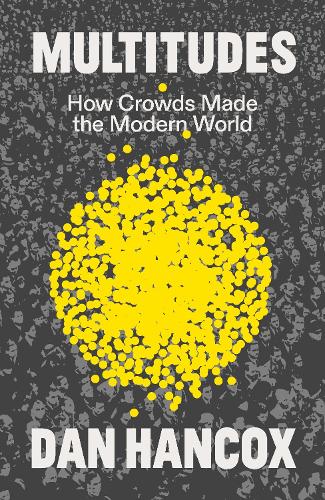
A raucous history of what brings people together and why those in power want to keep us apart - by the author of Inner City Pressure
From raucous football matches and raves to rubber-bullet-riddled riots, Hancox takes us into the crowd's pulsating heart to pose the questions that will define our age. Multitudes argues it is time to rethink long-held assumptions about crowd behaviour and psychology. The story of the modern world is the story of multitudes in action. Crowds are the ultimate force for change: the bringer of conviviality, euphoria, mass culture and democracy.
"British journalist Dan Hancox, in his new book Multitudes goes much further than his scholarly forebears in the effort to defend the crowd from its defamers. He is an unstinting admirer of crowds and crowd action, not just as a means of social change but as a heady social experience of transcendence." - The New Yorker
"This useful history reconsiders the crowd stretching back to the Paris Commune, and examines the influential work of one conservative psychologist that laid the ideological groundwork for crackdowns against future mass movements." - The New York Times Book Review
"Thought-provoking ... a celebration of the positive capacity of crowds to liberate." - New Humanist
"An examination of the rich history of crowds in entertainment, sports, and politics." - Kirkus Reviews
"Champions the erotic, capitalism-subverting, ego-transcending crowd ... blindsidingly touching." - The Observer
"Elegant and persuasive ... if by this point [Hancox] hasn't persuaded you to switch off the dross you're binge watching on Netflix and hotfoot it to a festival or football match, nothing will." - New Statesman
"Eloquent and soulful ... a work of Benjaminian optimism about the potential of mass populism and collective epiphany to enrich and expand the radical future." - Tribune
"Convincingly challenges Le Bon's influence on the prevailing social analysis of crowd behaviour." - Morning Star
"Lively and compelling ... [the] reframing of crowds as imbued with agency, even freedom, is a welcome corrective." - Times Literary Supplement