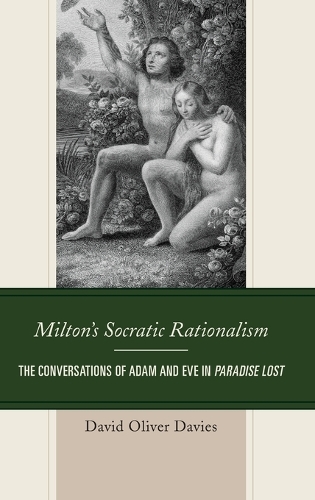
The conversation of Adam and Eve in Paradise Lost, that most obvious of Milton's additions to the Biblical narrative, enacts the pair's inquiry into and discovery of the gift of their rational nature in a mode of discourse closely aligned to practices of Socrates in the dialogues of Plato and eponymous discourses of Xenophon. Adam and Eve both begin their life "much wondering where\ And what I was, whence thither brought and how.” Their conjoint discoveries of each other's and their own nature in this talk Milton arranges for a in dialectical counterpoise to his persona's expressed task "to justify the ways of God to men." Like Xenophon's Socrates in the Memorabilia, Milton's persona indites those "ways of God" in terms most agreeable to his audience of "men"––notions Aristotle calls "generally accepted opinions." Thus for Milton's "fit audience" Paradise Lost will present two ways––that address congenial to men per se, and a fit discourse attuned to their very own rational faculties––to understand "the ways of God to men." The interrogation of each way by its counterpart among the distinct audiences is the "great Argument" of the poem.
"The most compelling features of Milton’s Socratic Rationalism are its thoughtful reconstruction of several intimate but nonetheless key moments in Paradise Lost, as well as its charting of Milton’s reappropriation of ancient narrative, structure, and rhetorical devices.. . . . Milton’s Socratic Rationalism is a thoughtful book which deserves the careful attention of scholars of Milton, ancient Greek political thought, literary criticism, and the history of political thought." - The Review of Politics