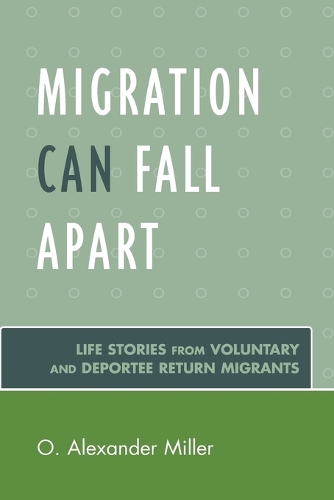
This work captures the compelling life stories of three types of Jamaican immigrants, including deportees, and examines how the transfer of different types of social capital affects their quests for social mobility. The concept of this particular type of social capital, in this case referred to as 'colonial capital' is introduced in the literature to categorize migrants. The term and idea of colonial capital derives from a quartet of ancient prejudices about family and skin pigmentation; education; social graces; and financial capital. The acquisition of any one element of colonial capital is of little use in achieving a higher class status. The stories of these immigrants reveal three types of migrants: those with high colonial capital who resettle in Jamaica; disgruntled migrants with mid-colonial capital who often become transmigrants; and deportees_a group whose low-colonial capital renders them vulnerable abroad and in Jamaica. As a consequence of the evaluation of this phenomenon, the 'Transnational Theory' is re-evaluated and extended to the 'Colonial Capital Theory of Migration.'
"This book is clearly written, the specific life stories of the interviewees are given strong representation so that the reader can make an independent judgment, and there are useful reflections on the part of the writer about his subject. It is important for migration scholars and researchers to read this short but very imaginative and suggestive work. It is a welcome addition to the growing body of research-based writings on an increasingly broadly shared global experience." - Journal of Ethnic and Migration Studies, August 2009