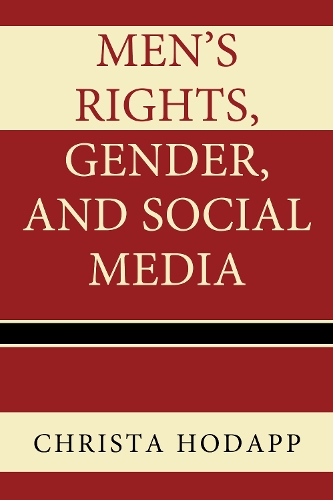
Книга Men's Rights, Gender, and Social Media
This work examines the contemporary men’s rights movement (MRM), a mainly online movement that claims men are oppressed by gender norms, women, and feminism. While some feminists and other progressives have dismissed the movement as simple misogyny, this book argues that the MRM expresses a growing cultural trend in male anger and frustration, and is an extreme manifestation of what has been previously referred to as a “masculinity crisis.” In order to assess the implications of the MRM for gender politics, this book explores the movement politically, investigating the ways in which online communication and media outlets have impacted contemporary meanings of identity, gender, language, and political engagement. Furthermore, a discussion of various issues promoted by the MRM, such as parenting, divorce, employment, and violence, provide deeper insights into the issues surrounding masculinity and gender politics in current sociopolitical contexts.
"The text examines the relationship between the contemporary men’s rights movement (MRM), feminism, and social media. It highlights the discourses, mission, and tactics that this online group mobilizes to critique and resist feminism and gender progressive agendas. Specifically, Hodapp (Univ. of Massachusetts Lowell) demonstrates how the movement is fueled by the 21st-century masculinity crisis, problematic themes of second-wave feminism, and the nature of digital media, which is unembodied and anonymous. While explicitly critical of the MRM and candid in her presentation of the problematic nature of the movement, Hodapp is not dismissive of the group; rather, she forces us to confront and interrogate the underlying tenets of the movement and reflect on feminist ideals that are not progressive. The text also highlights the potential and problematic movements that use social media as their vehicle…. [I]ts useful analysis is grounded in interdisciplinary theories of gender, corporeality and performativity, social movements, and digital humanities. In addition, the writing is very accessible and does not rely on jargon, making the text a good choice for undergraduate students. Summing Up: Recommended. Upper-division undergraduates through faculty." - CHOICE