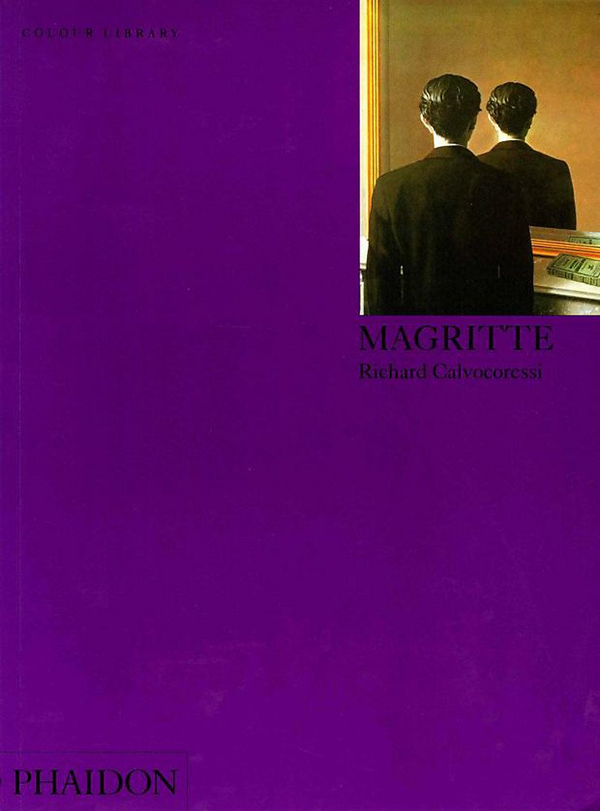
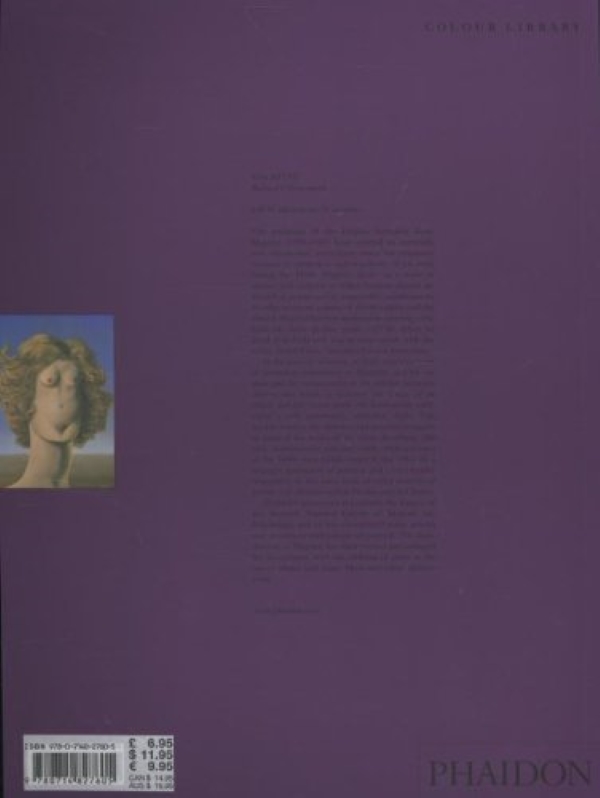
The paintings of the Belgian Surrealist Rene Magritte (1898-1967) have exerted an extraordinary fascination, particularly since the enormous increase in awareness and popularity of his work during the 1960s. Magritte shows us a world of silence and isolation in which familiar objects are altered or juxtaposed in 'impossible' combinations in order to create a sense of disorientation and the absurd. Many of his most memorable paintings date from his three prolific years 1927-30, when he lived near Paris and was in close touch with the writer Andre Breton and other French Surrealists. In his pre-war painting, stylistic concerns were of secondary importance to Magritte, whose main interest was in ideas or propositions about the world; for example, many of his paintings explore the relation between objects and words or between the image of an object and the object itself. He deliberately cultivated a cold, unemotive, 'style-less' style.