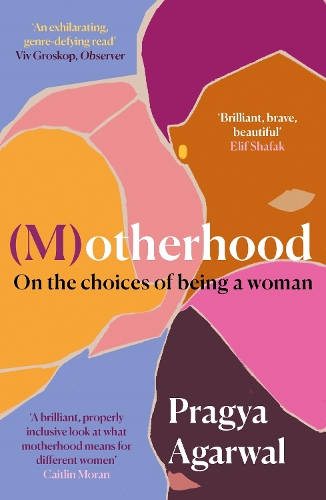
'An exhilarating, genre-defying read' Observer, 'Beautiful' Elif Shafak, 'Absolutely sensational' Michael Cashman, CBE, 'Powerful and compelling' New Statesman', 'Brilliant' Caitlin Moran
In a world where women have more choices than ever, society nevertheless continues to exert the stigma and pressures of less enlightened times when it comes to having children. We define women by whether they embrace or reject motherhood; whether they can give birth or not.
Behavioural Scientist Pragya Agarwal uses her own varied experiences and choices as a woman of South Asian heritage to examine the broader societal, historical and scientific factors that drive how we think and talk about motherhood. She looks at how women's bodies have been monitored and controlled through history, and how this shapes the political constructs of motherhood and womanhood now.
Extremely open in its honesty and meticulously researched, (M)otherhood probes themes of infertility, childbirth and reproductive justice, and makes a powerful and urgent argument for the need to tackle society's obsession with women's bodies and fertility.
"An exhilarating, genre-defying read . . . seamlessly interwoven with statistics, quotes and scientific evidence to clever narrative effect . . . reminiscent of Olivia Laing's writing on loneliness or the body . . . The whole thing adds up to the most thoughtful, empathic and inspiring science of the self" - * Observer *
"Riveting. Agarwal writes with searing honesty and tenderness about the joys and agonies of becoming a mother, of trying and failing to conceive again, and then of pursuing a route to motherhood that's widely seen as taboo . . . Agarwal writes beautifully about her own complicated experience" - * Guardian *
"Powerful and compelling . . . Agarwal is a precise, elegant writer who seeks answers by embracing complexity" - * New Statesman *