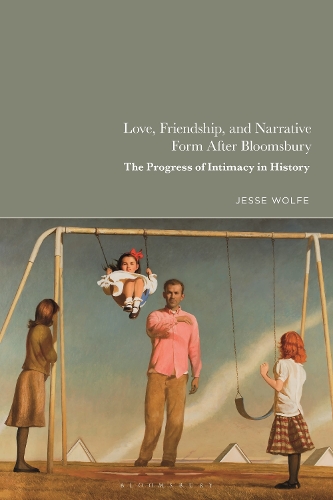
Книга Love, Friendship, and Narrative Form After Bloomsbury: The Progress of Intimacy in History
Exploring how key modernist figures from the Bloomsbury Group understood the intimacies of friends, lovers, spouses, and families as historically unfolding phenomena, this book offers an account of modernism’s legacies in contemporary fiction.
Exploring how the Bloomsbury Group’s cutting-edge thinkers—Virginia Woolf, Sigmund Freud, and E. M. Forster—understood the intimacy of friends, lovers, spouses, and families as historically unfolding phenomena, this book offers a compelling account of modernism’s legacies in contemporary fiction and demonstrates the myriad ways in which intimacy was a guiding and persistent idea explored by writers across the 20th-century and up to the present day. Often modernists have been celebrated for their insights into social and civilizational sickness but this book unearths a strain of modernist thought that is more complex and inspiring than this. It discusses how Bloomsbury’s thinkers wrestled with the question “Does intimate life improve?” as sexual egalitarianism expands, as taboos against same-sex love, interracial love, and singlehood wane, and as parents and children relate less formally and often more warmly toward one another. And it discusses how many of today’s major novelists, such as Salman Rushdie, Zadie Smith, Ian McEwan and Rachel Cusk, look to Bloomsbury’s thematic and formal examples when they reformulate this question for our time.
"Jesse Wolfe’s important new book offers a convincing reconsideration of the Bloomsbury Group’s impact on the contemporary novel and, more broadly, on the freedom to live and love in fulfilling ways. Love, Friendship and Narrative Form After Bloomsbury makes a compelling argument for the continuing vitality of the modernist paradigm: as solace, as exemplar, and as inspiration. Through nuanced readings of works by Rachel Cusk, Michael Cunningham, Zadie Smith and others, Wolfe mounts a persuasive sociological argument for the capacity of the contemporary novel to enlarge its readers’ emotional intelligence. The book risks asking if the expanded – and hard-fought -- sexual freedoms of the post-Freudian era have made us happier? and answers with a resounding affirmative. In Wolfe’s hands, the contemporary novel, inspired by the inventions of Bloomsbury modernism, is recast as nothing less than a guide to private life, past and present – and to future possibilities, as well." - Victoria Rosner, Professor and Dean of The Gallatin School of Individualized Study, New York University, USA