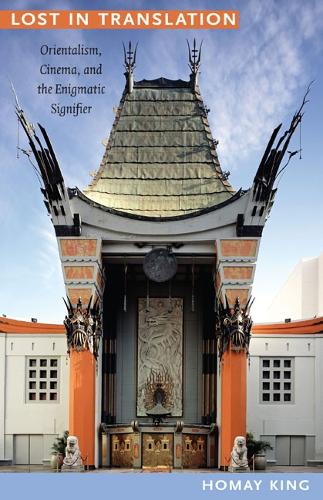
Книга Lost in Translation: Orientalism, Cinema, and the Enigmatic Signifier
An examination of how the fantasy of an inscrutable East has functioned in Hollywood cinema
In a nuanced exploration of how Western cinema has represented East Asia as a space of radical indecipherability, Homay King traces the long-standing association of the Orient with the enigmatic. The fantasy of an inscrutable East, she argues, is not merely a side note to film history, but rather a kernel of otherness that has shaped Hollywood cinema at its core. Through close readings of The Lady from Shanghai, Chinatown, Blade Runner, Lost in Translation, and other films, she develops a theory of the “Shanghai gesture,” a trope whereby orientalist curios and décor become saturated with mystery. These objects and signs come to bear the burden of explanation for riddles that escape the Western protagonist or cannot be otherwise resolved by the plot. Turning to visual texts from outside Hollywood which actively grapple with the association of the East and the unintelligible—such as Michelangelo Antonioni’s Chung Kuo: Cina, Wim Wenders’s Notebook on Cities and Clothes, and Sophie Calle’s Exquisite Pain—King suggests alternatives to the paranoid logic of the Shanghai gesture. She argues for the development of a process of cultural “de-translation” aimed at both untangling the psychic enigmas prompting the initial desire to separate the familiar from the foreign, and heightening attentiveness to the internal alterities underlying Western subjectivity.
"“[T]he book is an interesting read. Moreover, it makes a vibrant contribution to the important area of film studies that attends to ways of reading the other within diverse cultural and cinematic frameworks and this is to be welcomed.”" - Screening the Past
"“King's own arcade of analysis remains a formidable structure. With critical equanimity, she interweaves a variety of discourses—between psychoanalysis and phenomenology; film theory and cultural history; even classical Hollywood and experimental works—to undo the notion of their opposition and instead reveal their mutual investment. This book is a foundational work for future studies of not only the West's cultural interplay with East Asia, but broader concerns of alterity and the enigmatic in Hollywood itself.”" - Bryn Mawr Review of Comparative Literature
"“In Lost in Translation by Homay King, we can review notions of image, signification, message, and translation, primarily in American films, where mise-en-scène depicts East Asian Orientalist tropes. . . . What I especially appreciate in this undertaking is King’s elegant prose style, as well as aesthetic distance resulting from the close readings of individual film texts.”" - fort da