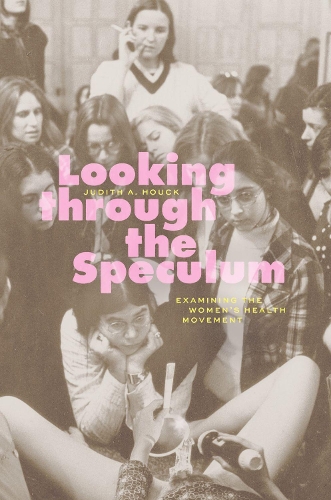
Книга Looking through the Speculum: Examining the Women’s Health Movement
Highlights local history to tell a national story about the evolution of the women’s health movement, illuminating the struggles and successes of bringing feminist dreams into clinical spaces.
The women’s health movement in the United States, beginning in 1969 and taking hold in the 1970s, was a broad-based movement seeking to increase women’s bodily knowledge, reproductive control, and well-being. It was a political movement that insisted that bodily autonomy provided the key to women’s liberation. It was also an institution-building movement that sought to transform women’s relationships with medicine; it was dedicated to increasing women’s access to affordable health care without the barriers of homophobia, racism, and sexism. But the movement did not only focus on women’s bodies. It also encouraged activists to reimagine their relationships with one another, to develop their relationships in the name of personal and political change, and, eventually, to discover and confront the limitations of the bonds of womanhood.
This book examines historically the emergence, development, travails, and triumphs of the women’s health movement in the United States. By bringing medical history and the history of women’s bodies into our emerging understandings of second-wave feminism, the author sheds light on the understudied efforts to shape health care and reproductive control beyond the hospital and the doctor’s office—in the home, the women’s center, the church basement, the bookshop, and the clinic. Lesbians, straight women, and women of color all play crucial roles in this history. At its center are the politics, institutions, and relationships created by and within the women’s health movement, depicted primarily from the perspective of the activists who shaped its priorities, fought its battles, and grappled with its shortcomings.
"“A well-researched, eye-opening book about the evolution of the women’s health movement. Highly recommended for readers interested in feminist theory and activism. It’s also a must for people frustrated with and angered by the prevalent biases within the medical system.” " - Library Journal
"“In this deeply researched and engaging work, Houck examines the impact of the women’s liberation movement on healthcare options for American women over the last fifty years. . . . Extensive use of existing secondary sources as well as a wealth of primary sources, including interviews done by the author with a variety of participants and activists, makes this a compelling and informative read.”" - Choice