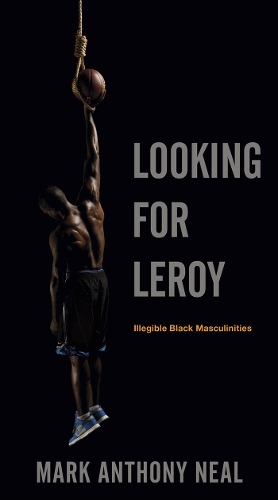
Книга Looking for Leroy: Illegible Black Masculinities
An engaging and provocative analysis of the complex ways in which black masculinity has been read and misread through contemporary American popular culture
Mark Anthony Neal’s Looking for Leroy is an engaging and provocative analysis of the complex ways in which black masculinity has been read and misread through contemporary American popular culture. Neal argues that black men and boys are bound, in profound ways, to and by their legibility. The most “legible” black male bodies are often rendered as criminal, bodies in need of policing and containment. Ironically, Neal argues, this sort of legibility brings welcome relief to white America, providing easily identifiable images of black men in an era defined by shifts in racial, sexual, and gendered identities.
Neal highlights the radical potential of rendering legible black male bodies—those bodies that are all too real for us—as illegible, while simultaneously rendering illegible black male bodies—those versions of black masculinity that we can’t believe are real—as legible. In examining figures such as hip-hop entrepreneur and artist Jay-Z, R&B Svengali R. Kelly, the late vocalist Luther Vandross, and characters from the hit HBO series The Wire, among others, Neal demonstrates how distinct representations of black masculinity can break the links in the public imagination that create antagonism toward black men. Looking for Leroy features close readings of contemporary black masculinity and popular culture, highlighting both the complexity and accessibility of black men and boys through visual and sonic cues within American culture, media, and public policy. By rendering legible the illegible, Neal maps the range of identifications and anxieties that have marked the performance and reception of post-Civil Rights era African American masculinity.
"Leroymines the contradiction between epistemologies and realness of self-making in relation to black men in popular culture. Neal has crafted an accessible text that creatively renders our understanding of black men as alien, offering complex connections between spatiality, cosmopolitanism, sound, and desire.-,r" - The Black Scholar
"Looking for Leroyis a fascinating study of Black masculinity." - The Crisis Magazine
"Whiteness and White privilege, Jay Z's entrance into the Pace Gallery recalls a scene nearly 30 years earlier, when three young Black men, clad in black leather jackets and black brims walked into another art space and were told, 'You guys don't belong here.' Just as Run DMC was breaking down commercial barriersMTV then as resistant to Black bodies as any high-end art galleryJean-Michael Basquiat was breaking down barriers in the art world. Although Picasso is the signifier that brings every one togetherand to our worst fears about Picasso and appropriating, dare I say colonizing, spaceit is Basquiat who clearly haunts this space." - Art Papers
"This is an important new book for gay and straight alike." - Windy City Times
"Looking for Leroychallenges readers to view black masculinity outside the scope in which it is imagined...Neal achieves his goal of radically rescripting accepted notions of a heteronormative black masculinity." - American Studies
"Looking for Leroyis very much an act of self-exploration; the men examined offer different variations of the type of black man Neal sees himself to be.This introspection adds to rather than detracts from an intriguing and thought-provoking addition to the growing research on black masculinity in the post-segregationist eraone that blurs the line and closes the gap between heteronormative scholarship and queer studies." - Cinema Journal
"Looking for Leroycontinues Mark Anthony Neals work of offering a nuanced, critical understanding of African American culture, in particular the ways African American culture constructs masculinity" - Journal of American Studies of Turkey
"Neal's critique of black masculinity in the U.S. confronts the enormous pressure placed on black males by society's assumptions. Through a pop-culture lens, he shows how the perpetuation of racial stereotypes continues to neutralize the potential of black men and boys." - Ms. Magazine