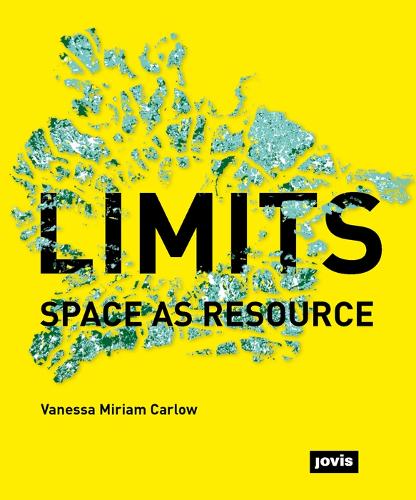
Книга Limits: Space as Resource
Space is a non-renewable resource. What happens when this resource becomes scarce and towns and cities can no longer expand? Is it possible to conceive of spatial development without expansion?
Two spatially restricted cities in Europe—West Berlin at the time of the Berlin Wall from 1961 to 1989, and London, which has been enclosed by a green belt since 1958—demonstrate the consequences and imperatives of such a scenario. If both cases are understood as the consequence of spatial limitation strategies, they provide insights into the challenges as well as the potential that such restrictions present in practice. They show how spatially limited cities take a new direction in order to find their own particular form, structure, and aesthetics, and how this results in innovations in planning culture. Based on extensive map material and analyses, Limits: Space as Resource explores the spatial components of the complex question of sustainability at the urban scale, in order to contribute to a more in-depth and refined understanding of sustainable urban development.Space is a non-renewable resource. What happens when this resource becomes scarce and towns and cities can no longer expand? Is it possible to conceive of spatial development without expansion?
Two spatially restricted cities in Europe—West Berlin at the time of the Berlin Wall from 1961 to 1989, and London, which has been enclosed by a green belt since 1958—demonstrate the consequences and imperatives of such a scenario. If both cases are understood as the consequence of spatial limitation strategies, they provide insights into the challenges as well as the potential that such restrictions present in practice. They show how spatially limited cities take a new direction in order to find their own particular form, structure, and aesthetics, and how this results in innovations in planning culture. Based on extensive map material and analyses, Limits: Space as Resource explores the spatial components of the complex question of sustainability at the urban scale, in order to contribute to a more in-depth and refined understanding of sustainable urban development.Raum ist eine nicht-erneuerbare Ressource. Doch was geschieht, wenn diese Ressource knapp wird und Städte nicht mehr expandieren können? Ist es möglich, eine räumliche Entwicklung ohne Ausdehnung zu denken?
Zwei räumlich eingeschränkte Städte in Europa – West-Berlin zu Zeiten der Berliner Mauer von 1961 bis 1989 und London, das seit 1958 von einem Grüngürtel umschlossen ist – verdeutlichen die Konsequenzen und Notwendigkeiten eines solchen Szenarios. Begreift man beide Fälle als Folge räumlicher Begrenzungsstrategien, so liefern sie Einblicke in die Herausforderungen, aber auch das Potenzial, die solche Begrenzungen in der Praxis mit sich bringen. Sie zeigen, wie räumlich eingeschränkte Städte neue Wege gehen, ihre eigene Form, Struktur und Ästhetik zu finden und wie daraus Innovationen in der Planungskultur resultieren. Anhand von umfangreichem Kartenmaterial und Analysen untersucht Limits: Space as Resource die räumliche Komponente der komplexen Frage einer Nachhaltigkeit im urbanen Maßstab, um schließlich zu einem vertieften und zugleich verfeinerten Verständnis einer nachhaltigen Stadtentwicklung beizutragen.