Rebecca Wragg Sykes has been fascinated by the vanished worlds of the Pleistocene ice ages since childhood, and followed this interest through a career researching the most enigmatic characters of all, the Neanderthals. After a PhD on the last Neanderthals living in Britain, she was a Marie Curie Fellow at the PACEA laboratory, Université de Bordeaux, France, working on Neanderthal landscapes and territories in the Massif Central, south-east France, as well as studying their cognition through the objects they made.
Alongside her academic expertise, she has also earned a reputation for exceptional public engagement communication as a speaker, in print and broadcast. Her writing has featured in the Guardian, Aeon and Scientific American, and she has appeared on history and science programmes for BBC Radio 4. She works as an archaeological and creative consultant, and co-founded the influential TrowelBlazers project, highlighting women in archaeology and the earth sciences.
@LeMoustier / www.rebeccawraggsykes.com/
'Beautiful, evocative, authoritative.' Professor Brian Cox
'A wonderful portrait of these enigmatic, long-lost relatives.' Professor Alice Roberts
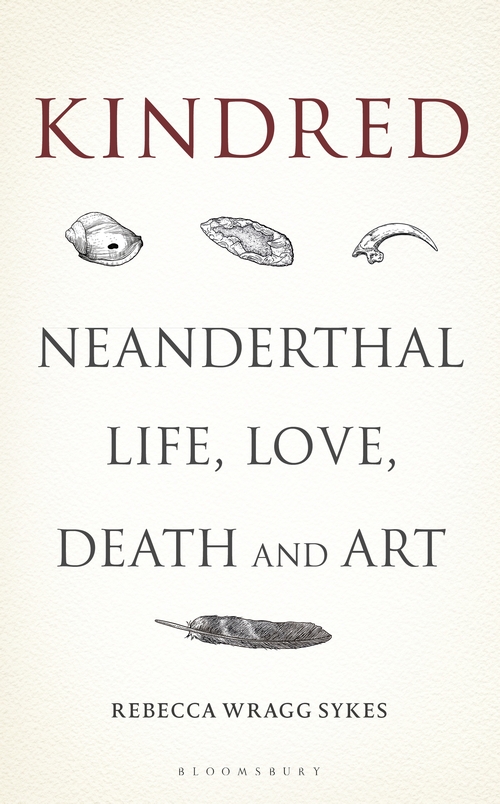
Kindred is the definitive guide to the Neanderthals. Since their discovery more than 160 years ago, Neanderthals have metamorphosed from the losers of the human family tree to A-list hominins.
In Kindred, Rebecca Wragg Sykes uses her experience at the cutting-edge of Palaeolithic research to share our new understanding of Neanderthals, shoving aside clichés of rag-clad brutes in an icy wasteland. She reveals them to be curious, clever connoisseurs of their world, technologically inventive and ecologically adaptable. They ranged across vast tracts of tundra and steppe, but also stalked in dappled forests and waded in the Mediterranean Sea. Above all, they were successful survivors for more than 300,000 years, during times of massive climatic upheaval.
At a time when our species has never faced greater threats, we're obsessed with what makes us special. But, much of what defines us was also in Neanderthals, and their DNA is still inside us. Planning, co-operation, altruism, craftsmanship, aesthetic sense, imagination, perhaps even a desire for transcendence beyond mortality.
Kindred does for Neanderthals what Sapiens did for us, revealing a deeper, more nuanced story where humanity itself is our ancient, shared inheritance. It is only by understanding them, that we can truly understand ourselves.
Beautiful, evocative, authoritative. Kindred is a beautifully written exploration of our fast-developing understanding of Neanderthals and their culture and a compelling insight into how modern science is revealing the secrets of an extinct species who, for 350 thousand years before Homo Sapiens became dominant, inhabited a world "as wide and rich as the Roman Empire."
Blending cutting-edge science with lyrical storytelling, Rebecca Wragg Sykes paints a detailed portrait of our enigmatic relatives.
Written with such pleasing, elegant prose, Kindred is a captivating ode to the subtle complexities of palaeoanthropology - the thrill of discovery, the frustrating gaps in the evidence, the tantalising question marks hovering above our favourite ideas. Dr Rebecca Wragg Sykes balances admirable scientific caution with her joyous enthusiasm, and the result is a generous, enthralling history of how we first came to know our ancient cousins, and how we're still getting to know them today.
Kindred is a tour de force. A rich and beautiful synthesis of all that is known about Neanderthal biology and culture, it should be required reading for anyone interested in the history of humanity.
Current, compelling, well researched, beautifully written and poetical, Kindred is like no other book you've read on Neanderthals.