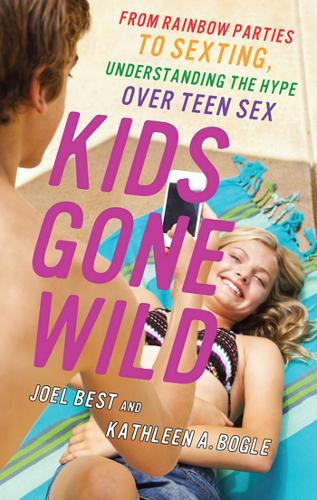
Книга Kids Gone Wild: From Rainbow Parties to Sexting, Understanding the Hype Over Teen Sex
The myths and truths of teen's sexual behavior.
Winner of the 2015 Brian McConnell Book Award presented by the International Society for Contemporary Legend Research
To hear mainstream media sources tell it, the sex
lives of modern teenagers outpace even the smuttiest of cable television shows.
Teen girls “sext” explicit photos to boys they like; they wear “sex bracelets”
that signify what sexual activities they have done, or will do; they team up
with other girls at “rainbow parties” to perform sex acts on groups of willing
teen boys; they form “pregnancy pacts” with their best girlfriends to all
become teen mothers at the same time. From The Today Show, to CNN, to the New York Times, stories of these events
have been featured widely in the media. But are most teenage—or
younger—children really going to sex parties and having multiple sexual
encounters in an orgy-like fashion?
Researchers
say no—teen sex is actually not rampant and teen pregnancy is at low levels.
But why do stories like these find such media traffic, exploiting parents’
worst fears? How do these rumors get started, and how do they travel around the
country and even across the globe?
In Kids Gone Wild,
best-selling authors Joel Best and Kathleen A. Bogle use these stories about
the fears of the growing sexualization of childhood to explore what we know
about contemporary legends and how both traditional media and the internet perpetuate
these rumors while, at times, debating their authenticity. Best and Bogle
describe the process by which such stories spread, trace how and to where they have moved, and track how
they can morph as they travel from one medium to another. Ultimately, they find
that our society’s view of kids raging out of control has drastic and
unforeseen consequences, fueling the debate on sex education and affecting policy
decisions on everything from the availability of the morning after pill to who
is included on sex offender registries.
A
surprising look at the truth behind the sensationalism in our culture, Kids Gone Wild is a much-needed wake-up
call for a society determined to believe the worst about its young people.
"The book is easy to follow and Best and Bogle describe the collection of data and the ways in which data is presented in an easy to understand manner. The intended audience is certainly those interested in or studying Sociology, Gender studies, Human Sexuality, and Criminal Justice. But the book also extends to parents and those working with youth. It is an excellent guide to use when learning about the connection between contemporary legends, the media, and current behavior among youth." - Metapsychology
"Bogle and Best analyzed the trajectory of isolated rumors about teenage debauchery to major network coverage on the evening news and found that few reporters took the time or effort to investigate the facts. Each time the public hears & Coming up at six: shocking news about the bracelet your kid is wearing, in the same breath as substantive reports about the Middle East and the economy, [Bogle] said, they are very difficult to shake." - The Inquirer
"Best and Bogle dissect both these trends and convincingly determine that they are legendsstories that spread even though few kids have actually gone to a sex party or had sex based on the color of a bracelet. . . . Why do we so readily believe the tall tales? That part is easy. As Best and Bogle observe, rainbow parties and sex bracelets feed our paternal obsession with & threats to childrens innocence. For conservatives, theyre grist for the mill of abstinence-based sex education and chastity pledges. For liberals, theyre cause for worrying about the degradation of girls in a sexist culture" - Slate.com
"Although research shows that white, middle-class teens are not actually out of control, thats not the point here. Instead, Best and Bogleillustrate how infotainment reporting, online hubbub, and misleading statistics combine with our psychological tendency to create stories that stick, even when theres no supporting evidence. . . . Even more importantly, the authors examine how cultural memes spread; their call to take a more critical look at the sensational stories we share, and how they do or dont serve us, is worth hearing." - Publishers Weekly