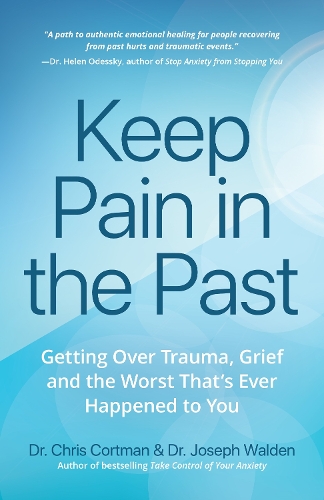
Книга Keep Pain in the Past: Getting Over Trauma, Grief and the Worst That's Ever Happened to You (PTSD Book, CBT for Depression, EMDR, and Readers of How to Love Yourself, The Complex PTSD Workbook, or It Didn't Start With You)
Dr. Cortman defines emotional trauma broadly--while it includes people who have suffered severe psychological harm (childhood abuse, PTSD from war, etc.), he maintains that most of us have some serious trauma in our past that is affecting our present negatively. Based on his over 65,000 hours of work with emotional trauma patients, the book teaches the process for self-healing that he uses with his patients. The process is based on the brilliant innovations of Gestalt therapist Dr. Fritz Perls, some of whose ideas were absorbed into CBT, but others lost after his death in 1970. Central to the process is how Perls provides a pathway to closure—a pathway that is remarkably easy for patients to travel on their own. The book offers a new solution to a common problem, and will find an audience among the readers of books like The Body Keeps Score and Emotional First Aid. In addition to his clinical practice, he is on the staff of Venice, FL Regional Medical Center, and the co-author of a children’s prevention/wellness program called the Social Black Belt, which is being taught in all of Sarasota high schools this year as well as many of its elementary and middle schools. Chris currently serves as the treating psychologist on a new MTV program, Siesta Key, a reality show for twenty-somethings who are struggling with relationships and other issues. The the co-author of two books (with fellow psychologist Dr. Harold Shinitzky), Your Mind: An Owner’s Manual (Career Press, 2009) and Take Control Of Your Anxiety (Career Press, 2015), he is a frequent speaker in the area and appears in a variety of media regularly.
Find Relief from Emotional Trauma
“The self-healing process mapped out in Keep Pain in the Past is based on decades of successful treatment of patients and offers help and hope to those who need it.”—Dr. John Duffy, author of Parenting the New Teen in the Age of Anxiety.
Move on from the grief and trauma of your past. Created by two experienced psychologists, discover a step-by-step wellness process that has provided relief for their patients.
Heal old wounds. Contrary to what many people believe, we can recover from emotional trauma on our own, without thousands of dollars spent on therapists. Whether it is extreme trauma such as sexual abuse or the horrors of war or less dramatic shame and guilt, we don’t need to spend years in intensive therapy to recover.
A 21st century skill for treating emotional trauma. While most people know what can be done to treat physical ills―like using ice on a muscle sprain―they don’t realize they can apply certain psychological principles to treat anxiety, depression, and other conditions.
Learn from the success of others. Discover how Sheri, a 37-year-old attorney, recovered from panic attacks that seemed to come out of nowhere. Follow the journey of Mark, a 29-year-old Army veteran who experienced the horror of war in Afghanistan, as he healed from the downward spiral that had caused him to lose his job and become increasingly uncommunicative with his family. Explore how Melinda, a 42-year-old professor who struggled to sustain a romantic relationship, confronted her torturous childhood and found love that is still going strong after three years.
Inside find:
- Tips on how to confront your emotional baggage
- Advice on reaching closure
- A path to a life not haunted by the trauma of your past
If you liked books such as The Body Keeps the Score or Getting Past Your Past, you’ll want to read Dr. Cortman and Dr. Walden’s Keep Pain in the Past.