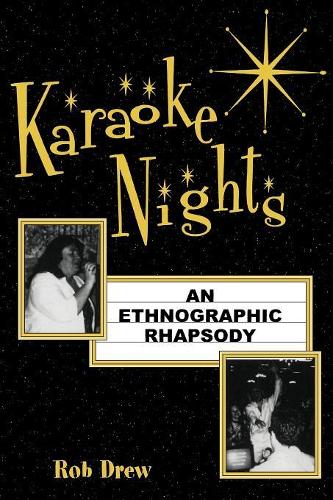
Книга Karaoke Nights: An Ethnographic Rhapsody
Karaoke. The word conjures all kinds of visions_possible stardom, abject performance terror, or just head-shaking bewilderment. Ten years ago when the Japanese craze had only recently arrived in the U.S., Rob Drew was drawn to the phenomenon as subject of research. What he discovered will fascinate and surprise you, whether you're a student of popular culture or just curious what's going to happen next Saturday when you get up to sing your first song at the corner bar. Karaoke Nights is both a keen observation on the external behavior of deejays, performers, and audience and an intimate portrait of the emotional roller coaster that is the internal life of a karaoke singer. Drew lets you feel just what itOs like to be the performer_agonizing over the song, feeling the nervous anticipation, analyzing your performance. At the same time he provides a probing analysis of the varied roles karaoke plays in popular culture and how it can guide an understanding of Olocal musicO and the relationship of ordinary people to stardom.
"His book provides insightful analyses of the everyday rituals for karaoke performers and the cultural significance of karaoke, while serving as a model for blending cultural studies, performance studies, and media criticism. . . . Drew weaves theory with observations, participant observation, and interviews in a way that allows the reader not only to more fully understand the business of organizing and emceeing karaoke shows, but also to feel the nervousness and awkwardness of performing and to gain some insight into the dreams that are held by some performers." - Text and Performance Quarterly
"The power of Drew's ethnography lies in the way he is able to describe the experience of karaoke so that it makes plausible sense to the reader who begins with no idea what karaoke is all about and would never, ever think of doing it himself or herself. . . . Drew's super descriptions of romantic behavior, flirting, team performances, and other types of karaoke interaction make his book difficult to put down before finishing." - Journal Of Contemporary Ethnography
"This book must rank among the most engaging academic titles in recent memory. Whereas other scholars in the social sciences. . . hide their topic behind oblique language , Drew's prose lays all bare like a longshoreman belting out 'Cracklin' Rose' in a neighborhood bar on a Thursday night. His choice of a topic for his thesis required the same dose of nerve (perhaps chutzpah is a better word) the typical Karaoke participant shows when taking microphone in hand." - American Studies International, October 2003, Vol. Xli, No.
"Drew's extraordinary ethnography of the world of Karaoke combines vivid narratives of performance with critical commentary on the popular music industry, celebrity culture, and social norms surrounding public performance. . . . Drew and his fellow performers embrace 'the radical notion that culture is ordinary—that music is not marginal to daily life, something to be supplied by a chosen few artists, but a necessary part of living'. . . . Instructors of ethnography will find that Drew's conversational writing style, engaging narratives, and thoughtful connections between theory and everyday life form an outstanding exemplar of contemporary ethnographic work. Perhaps most impressively, Drew accomplishes the difficult feat of artfully interweaving abstract postmodern, performance, and social theory throughout his descriptions and reflections on Karaoke performances. The result is an accessible and fascinating discussion that is deeply grounded in rich details and illustrative of the real-world implications of 'high' theory for contemplating—and celebrating—contemporary life." - Communication Research Trends, Vol. 22 (2003) No. 4
"A highly readable book . . . deftly provides a simultaneous account of the joys and embarassments of the rituals of public performance. . . . In his assiduous attention to the characters inhabiting this world, he covers not only the performers but the emcees and non-performing members of the audience as well . . . a satisfying read. . . . His forthright and unapologetic defence of karoake is nicely offset by an amiable prose style that is as adept and professional as the karoake performances are rough and ready, but no less honest." - Cambridge University Press, Vol. 23/1 - 2004