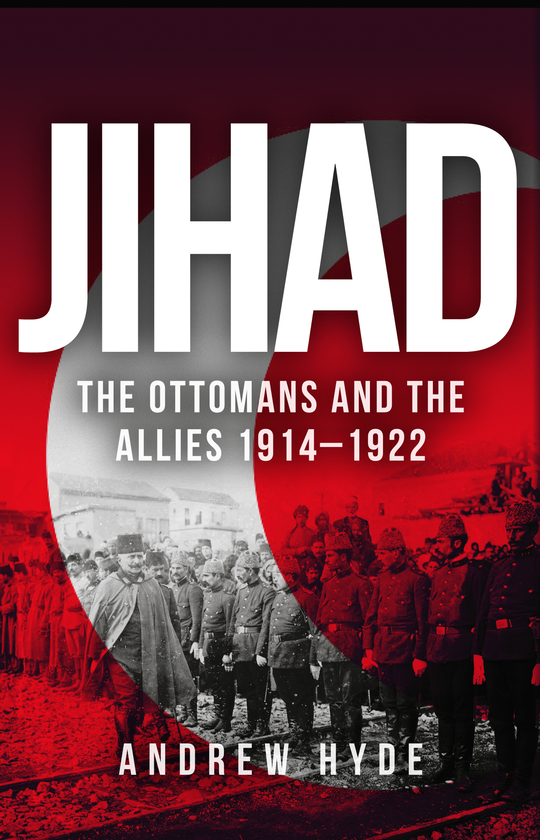
The sprawling Ottoman Empire was at the point of dissolution by November 1914 when she declared a Holy War against the Allied Powers and threw in her lot with Germany. It was a disastrous decision that set in chain a series of cataclysmic events, which culminated in the demise of an ancient regime and the emergence of a modern, secular republic. The first jihad in the Arab world since the Crusades was to continue long after the Armistice of 1918, as the defeated empire faced a triumphalist Greece, supported by Britain, seeking to re-establish hegemony over Anatolia. This caused outrage throughout the Muslim world, threatened British paramountcy in India, and fractured diplomatic relations with close allies and the unity of her empire.
Confronted with the indefatigable resistance of one man, Kemal Ataturk, Greek dreams ended in ashes, whilst the stubborn support of Lloyd George for Britain’s ally resulted in his own political extinction. It is a warning from history, including as it does ethnic cleansing, pogroms, regime change and political hubris. It is a story of steely determination and dogged bravery in the face of brazen territorial expansionism. It is also the history of the first modern jihad.
- The
story is relevant for the present situation in the Middle East: it reveals parallels between the first modern Jihad of 1914–1922 and that still
being waged against the West today
- Follows similar successful books such as 'On Secret Service East of Constantinople' by Peter Hopkirk (John Murray, 2006)
- Author has appeared on television, for BBC Timewatch, for previous writing on the Second World War