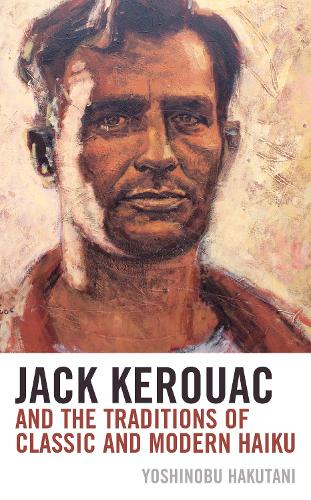
Книга Jack Kerouac and the Traditions of Classic and Modern Haiku
Jack Kerouac and the Traditions of Classic and Modern Haiku is a reading of the haiku collected in Jack Kerouac’s Book of Haikus, edited by Regina Weinreich, (2003), one of the two largest collections of English haiku. “Above all,” Kerouac wrote in his journal, “a Haiku must be very simple and free of all poetic trickery and makes a little picture and yet be as airy and graceful as a Vivaldi Pastorella.” Before trying his hand at composing haiku, Kerouac learned, as did Wright, the theory and technique of haiku from R. H. Blyth, the most influential haiku scholar and critic. Most of Kerouac’s haiku reflect eastern philosophies―Confucianism, Buddhist ontology, and Zen―, as do classic haiku. A son of devout French Canadian Catholic parents, the young Kerouac was impressed with Christian doctrine, but later was inspired by Buddhism. In his haiku Kerouc conflates Christian doctrine of mercy with that of Buddhism. Classic haiku taught Kerouac that not only must human beings treat their fellow human beings with respect and compassion, but they must also treat nonhuman beings such as animals, insects, plants, and flowers as their equals. Many of Kerouac’s haiku can be read as modern haiku for the technique of beat poetics he applied. All in all, Kerouac’s haiku express the worldview that human beings are not at the center of the universe.
"An impressively erudite and informative study of a particular aspect of Jack Kerouac's extraordinary literary work, "Jack Kerouac and the Traditions of Classic and Modern Haiku" is a truly exceptional and unreservedly recommended addition to college and university library Literary Studies & Haiku Poetry Studies collections in general, and Jack Kerouac supplemental curriculum reading lists in particular." - Midwest Book Review