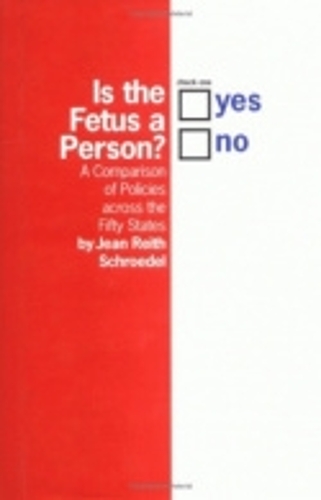
Книга Is the Fetus a Person?: A Comparison of Policies across the Fifty States
Without a doubt, the sharpest public debates over the value of fetal life have revolved around the conditions, if any, under which abortion should be legal. Yet the question of whether the fetus is or is not a person is central in two other policy domains: substance abuse by pregnant women and assaults on pregnant women, especially assaults that cause the death of a fetus.At first glance, all three issues seem similar—all ask the question of how the state should respond to actions that threaten or destroy fetal life. But the response of state and society to each has been very different: while the highly charged debate over abortion rights rages unabated, the other two issues engender no such social or political divisions. And while drug use and third-party fetal killings are universally condemned, "fetal abuse" is a term used only to describe harm that a pregnant woman brings to her own fetus, and not harm brought to it by a third party. Similarly, a great deal of media attention has been paid to such "fetal abuse," while the question of third-party harm has been all but ignored.Is the Fetus a Person? analyzes fetal personhood by examining all of the major areas of the law that could implicitly or explicitly award the fetus such status. Jean Reith Schroedel presents a comprehensive history of fetal protection ideas and policies in America, considering the moral and legal underpinnings of existing laws while paying particular attention to the influence of gender and power relations on their formation. As much a model for future research as a study of the status of the fetus, this book offers an extraordinary examination of one of the most divisive and complex issues of late-twentieth-century American life.
Without a doubt, the sharpest public debates over the value of fetal life have revolved around the conditions, if any, under which abortion should be legal. Yet the question of whether the fetus is or is not a person is central in two other policy domains: substance abuse by pregnant women and assaults on pregnant women, especially assaults that cause the death of a fetus.
At first glance, all three issues seem similar—all ask the question of how the state should respond to actions that threaten or destroy fetal life. But the response of state and society to each has been very different: while the highly charged debate over abortion rights rages unabated, the other two issues engender no such social or political divisions. And while drug use and third-party fetal killings are universally condemned, "fetal abuse" is a term used only to describe harm that a pregnant woman brings to her own fetus, and not harm brought to it by a third party. Similarly, a great deal of media attention has been paid to such "fetal abuse," while the question of third-party harm has been all but ignored.
Is the Fetus a Person? analyzes fetal personhood by examining all of the major areas of the law that could implicitly or explicitly award the fetus such status. Jean Reith Schroedel presents a comprehensive history of fetal protection ideas and policies in America, considering the moral and legal underpinnings of existing laws while paying particular attention to the influence of gender and power relations on their formation. As much a model for future research as a study of the status of the fetus, this book offers an extraordinary examination of one of the most divisive and complex issues of late-twentieth-century American life.
"
Jean Reith Schroedel's provocative and well-researched book tests the rhetoric of the prolife movement, which focuses on the protection of the most vulnerable among us, and the rhetoric of the prochoice movement, which focuses on the protection of women's equality and autonomy. By examining the degree to which antiabortion forces also support other measures to enhance the well-being of fetuses and infants, Schroedel concludes that their motivations are better explained by a resistance to female autonomy... Schroedel's book develops important evidence for the claim that this battle will not be won or lost by our regard for fetal life, but rather by our regard for women's equality and the obligations of all people, men and women, to make sacrifices for others.
" - D