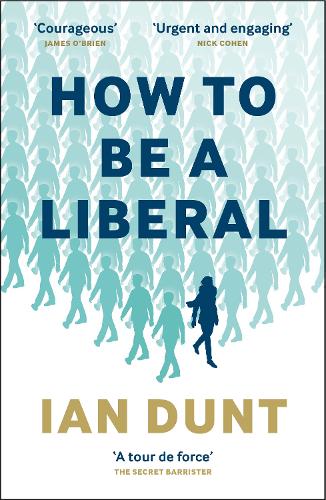
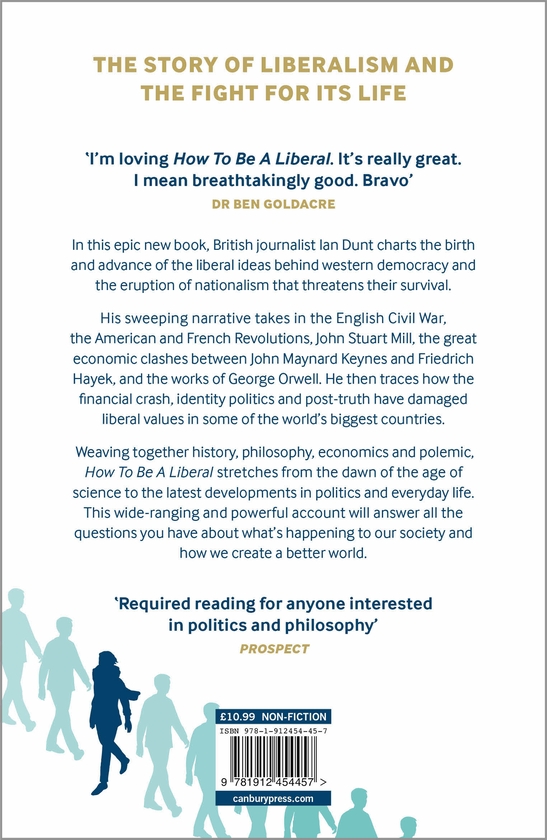
Книга How To Be A Liberal: The Story of Freedom and its Fight for Survival
Liberalism is under attack. From the rise of nationalism and populism to the decline of trust in institutions, liberals are facing unprecedented challenges. But what does it mean to be a liberal in the 21st Century? And how can we defend the values that we hold dear?
In his new book, How to Be a Liberal, Ian Dunt provides a clear and concise guide to liberalism for the modern age. Drawing on his years of experience as a journalist and political commentator, Dunt argues that liberalism is not just a set of abstract principles, but a practical guide to living a good and meaningful life.
In the book, Dunt covers a wide range of topics, including:
- What is liberalism and why is it important?
- The history of liberalism and its key thinkers
- The different types of liberalism and their strengths and weaknesses
- How to be a liberal in a world that is increasingly hostile to liberalism
Dunt's writing is witty and engaging, and he makes complex ideas accessible to a general audience. He is also not afraid to tackle difficult topics, such as the challenges of multiculturalism and the rise of identity politics.
But what makes How to Be a Liberal truly unique is Dunt's emphasis on the importance of humor and irony in the defense of liberalism. He argues that liberals need to learn to laugh at themselves and their opponents, and to avoid taking themselves too seriously.
In one passage, Dunt writes:
"Liberalism is not a religion. It is a set of ideas that are open to challenge and debate. Liberals should never be afraid to laugh at themselves or their own beliefs. In fact, I would argue that a sense of humor is essential for any liberal who wants to be effective in the world."
Dunt's book is a timely and important contribution to the debate about liberalism in the 21st century. It is a must-read for anyone who wants to understand what it means to be a liberal today and how to defend the values that we hold dear.
‘A tour de force.’ – THE SECRET BARRISTER
‘Urgent and engaging.’ – NICK COHEN, OBSERVER COLUMNIST
‘A phenomenal history from a truly big mind.’ – DAVID SCHNEIDER, WRITER
'Required reading for anyone interested in politics and philosophy.' - PROSPECT
In a soaring narrative that stretches from the battlefields of the English Civil War to the 2008 Wall Street crash and Brexit, Ian Dunt tells the story of liberalism from its birth in the fight against absolute monarchy to the modern-day struggle against nationalism.
Narrated by the author, this vivid, epic book explains the political ideas which underpin the modern world.
Written by the presenter of the Origin Story podcast, it is a call to action for those who believe in freedom and reason, and a clear-throated defence and explanation of why those values matter to us all, in our everyday lives.
Mostly, though, it is political history and philosophy as it should be written (and read): taut, thought-provoking and bursting with ideas.
Among the topics dealt with are:
- The birth of liberalism with Rene Descartes
- Radical ideas of freedom in the English Civil War
- Mob rule during French Revolution
- Liberal values in the American War of Independence
- Benjamin Constant's philosophical revolution
- John Stuart Mill, Harriet Taylor and liberalism's great love affair
- The Nazis and Soviets snuff out individual rights
- Building a liberal world with John Maynard Keynes
- The rise of identity politics and groupthink
- The viral threat from social media
- Liberalism's failures, from feminism to the rust belt
- From the US to Hungary, nationalism sweeps the world
- Why we fight for our values - the rebellion begins here
Hailed as 'courageous' by LBC's James O'Brien and as a 'tour de force' by the Secret Barrister, How to be a Liberal is both a history of the growth of individual liberty and a rally cry to turn back the new populism threatening democratic values and personal freedoms.
Reviews
‘A tour de force; a mighty trumpet blast for the forces of liberalism and enlightenment in the face of a global tide of ignorance and populism.’
– THE SECRET BARRISTER
‘This is a history of ideas as it should be written – brilliant, vivid story-telling about the people who shaped liberalism, the challenges it has faced over the centuries, its commitment to the truth and why it’s now more important than ever to defend it.’
– CAROLINE LUCAS MP
‘How To Be A Liberal is required reading for today’s political debates.’
– ANNE APPLEBAUM, TWILIGHT OF DEMOCRACY
'I'm loving How to be a Liberal. It's really great. I mean breathtakingly good. Bravo.'
- DR BEN GOLDACRE
'Dunt... describes liberalism as “an enormous, boisterous, confounding bloody thing,” and writes passionately in its favour, as a counterweight to ignorance and populism. This book is required reading for anyone interested in politics and philosophy.'
- PROSPECT
About the Author
Ian Dunt is a columnist with the I newspaper and presents the Origin Story and Oh God, What Now? podcasts.
His first book, Brexit: What the Hell Happens Now? (Canbury Press, 2017), on Britain's challenge in leaving the European Union, was a critically-acclaimed bestseller.
In How To Be A Liberal (Canbury, 2020), the journalist tells the epic story of personal freedom. Ranging across history, politics and economics, he makes a powerful case for a radical brand of egalitarian liberalism that can safeguard individuals while looking after us all.
Extract - The New Nationalism
(starting with the nationalist blueprint of Viktor Orbán's Hungary)
Liberalism had been weakened by the financial crash, the rise of identity war and anti-truth. Then, in 2016, nationalism punched through its defences with breakthroughs in Britain and America.
For many people, this was the start of the nationalist takeover. But in fact its momentum had been building for years.
Hungary’s leader, Viktor Orbán, had blazed the trail. He demonstrated how a nationalist agenda could create a narrative of division, amass vast executive power, and subvert and manipulate democracy.
Orbán’s ascent had begun a decade earlier with an audio recording that changed the direction of Hungarian politics. In 2006, comments from the Socialist prime minister, Ferenc Gyurcsány, to party members were secretly taped and released to the public.
‘We have fucked it up,’ Gyurcsány could be heard saying. ‘Not a little but a lot. We have obviously lied throughout the past one and a half to two years. It was perfectly clear that what we were saying was not true. We did not do anything for four years. Nothing. I had to pretend for one and a half years that we were governing. Instead, we lied in the morning, at noon and at night.’
It is hard to think of any political communication, in any country, in living memory that had a more devastating impact on an incumbent leader. Gyurcsány had shredded his reputation and that of the Socialist party. Riots erupted in the street, but he struggled on in power for several more years.
Then the financial crisis hit. The collapse of the banking system battered eastern Europe. Before the crisis, around $50 billion of investment flowed into the region every quarter. In the last quarter of 2008, that had reversed into an outflow of $100 billion. Domestic currencies plunged and the cost of servicing international loans spiralled. In a matter of weeks, many Hungarian families saw their mortgage or car loan bills surge by 20 per cent.
Hungary was forced to seek an emergency package from the IMF and EU. The terms were actually relatively generous, but public opinion inside the country viewed it as a humiliation. Nationalists branded the requirements attached to the loan an act of neocolonialism. They compared it to the Treaty of Trianon after the First World War, when Hungary was stripped of two-thirds of its territory.
Orbán, the leader of the far-right Fidesz party, took the spoils. He swept into power in 2010 with two-thirds of the parliamentary seats – a super-majority that allowed him to do almost anything he wanted. And what he wanted was to destroy liberalism in Hungary.
Buy the book to continue reading