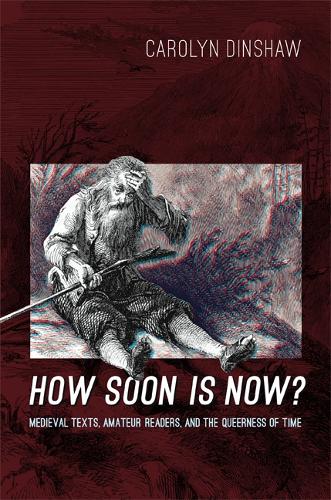
Книга How Soon Is Now?: Medieval Texts, Amateur Readers, and the Queerness of Time
Performs a powerful critique of modernist temporal regimes through its revelatory exploration of queer ways of being in time
How Soon Is Now? performs a powerful critique of modernist temporal regimes through its revelatory exploration of queer ways of being in time as well as of the potential queerness of time itself. Carolyn Dinshaw focuses on medieval tales of asynchrony and on engagements with these medieval temporal worlds by amateur readers centuries later. In doing so, she illuminates forms of desirous, embodied being that are out of sync with ordinarily linear measurements of everyday life, that involve multiple temporalities, that precipitate out of time altogether. Dinshaw claims the possibility of a fuller, denser, more crowded now that theorists tell us is extant but that often eludes our temporal grasp.
Whether discussing Victorian men of letters who parodied the Book of John Mandeville, a fictionalized fourteenth-century travel narrative, or Hope Emily Allen, modern coeditor of the early-fifteenth-century Book of Margery Kempe, Dinshaw argues that these and other medievalists outside the academy inhabit different temporalities than modern professionals operating according to the clock. How Soon Is Now? clears space for amateurs, hobbyists, and dabblers who approach medieval worlds from positions of affect and attachment, from desires to build other kinds of worlds. Unruly, untimely, they urge us toward a disorderly and asynchronous collective.
"“Carolyn Dinshaw’s third full-length monograph demands attention from those who do contemporary queer studies and medieval literary studies alike, and from those trying to figure out a less-alienated relationship to academic work in an increasingly corporatized university. . . . This book is clearly a labor of love while also an argument for falling in love with queer studies all over again.”" - GLQ
"“How Soon Is Now? is scholarly, eminently readable, and insightful. Creative in its structure and wide in its ambit, Dinshaw’s long-awaited book cogently argues that the now we inhabit is denser with possibility than we have imagined—and that medieval writers as well as their amateur readers have known this conjunctive truth for a long time. The book is required reading for anyone interested in the intersections among history, community, textuality, sexuality, writing, dreaming, loving—that is, for anyone who cares about the humanities today.”" - Clio
"“[D]elightfully original and thoughtful…Highly recommended.”" - Choice
"“Dinshaw has written a delightful book that takes pleasure in its subject; both professional and nonprofessional readers could enjoy and learn from it. . . . Because How Soon Is Now? argues that there is no fundamental distinction between amateur and professional, it welcomes both categories of reader into the book and into the field of medieval studies.”" - Journal of Medieval Religious Cultures
"[An] inspiring meditation on the nature of time . . . arguing powerfully for the possibilities opened up by relationships to the past which Dinshaw identifies as queer." - Year's Work in English Studies
"“How Soon Is Now? balances urgency with careful reflection and offers a model for scholars to achieve the confidence to recognize when ideas need to be developed slowly—because, sometimes, some things, some people, and some ideas are worth the wait.”" - Modern Philology
"In How Soon is Now, the author’s literary inquisitiveness, her ability to create links between very different, heterogeneous concepts, together with her narrative flexibility rooted in a plethora of examples, make for a very creative, dynamic and didactic book." - Cercles