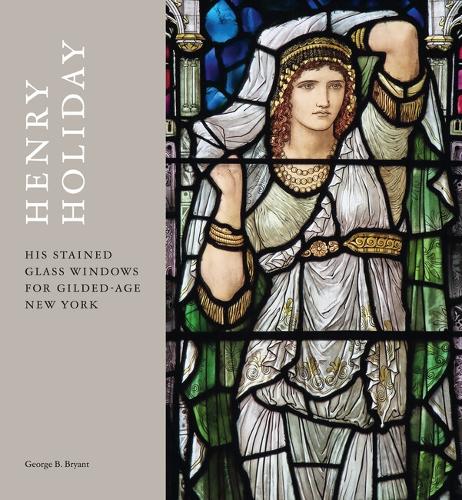
Henry
Holiday (1839–1927) was a polymath who counted figures such as Lewis Carroll,
William Morris, Edward Burne-Jones and Emmeline Pankhurst as his friends. Most
significantly, he was unquestionably one of the greatest stained-glass artists
of the Victorian-Edwardian period, yet his considerable achievements have not received the recognition that they deserve.
Taking Holiday’s commissions for New York State churches as its
focus, George Bryant’s ground-breaking study places the artist’s transatlantic
accomplishments in the context of the social, artistic, religious and economic
shifts that shaped his success in the US during America’s Gilded Age – a period
where existing social hierarchies were challenged by new money and European immigration that ended with the outbreak of the First World War. Also
providing a clear understanding of the technical and aesthetic differences that
set Holiday's stained glass apart from that of his contemporaries such as
Edward Burne-Jones, La Farge, and Tiffany, Bryant's truly original publication, based on substantial archival
research, makes a significant contribution to our understanding of
nineteenth-century stained-glass design and Henry Holiday's important achievements.