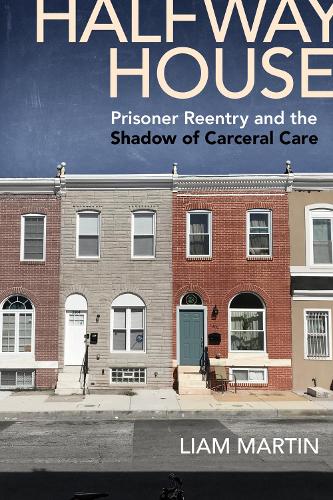
Книга Halfway House: Prisoner Reentry and the Shadow of Carceral Care
An inside look at the struggles former prisoners face in reentering society
Every year, roughly 650,000 people prepare to reenter society after being released from state and federal prisons. In Halfway House, Liam Martin shines a light on their difficult journeys, taking us behind the scenes at Bridge House, a residential reentry program near Boston, Massachusetts.
Drawing on three years of research, Martin explores the obstacles these former prisoners face in the real world. From drug addiction to poverty, he captures the ups and downs of life after incarceration in vivid, engaging detail. He shows us what, exactly, it is like to live in a halfway house, giving us a rare, up-close view of its role in a dense and often confusing web of organizations governing prisoner reentry.
Martin asks us to rethink the possibilities—and pitfalls—of using halfway houses to manage the worst excesses of mass incarceration. A portrait of life in the long shadow of the carceral state, Halfway House lets us see the struggles of reentry through the eyes of former prisoners.
"Martin focuses on the role of the halfway house in a dense and often confusing web of organizations governing prisoner reentry and calls for a rethinking of the possibilities and pitfalls of using halfway houses to manage the worst excesses of mass incarceration." - Law and Social Inquiry
"This highly sophisticated, indeed exemplary, ethnographic study of Bridge House, a halfway house in Boston, is an essential contribution to contemporary and future discussions within both academic and policy-making circles. It is an excellent account of the many dilemmas surrounding reentry organizations and programs that still retain many carceral elements that the target population experienced in prisons and jails." - Choice
"Across nine chapters, Martin offers a moving ethnographic account of Joe's experience at Bridge House, framed with sharp insights into the social forces bearing down on him within and beyond this public and privately funded organization… Like the concept of carceral care, this book is fundamentally about contradictions." - Punishment & Society