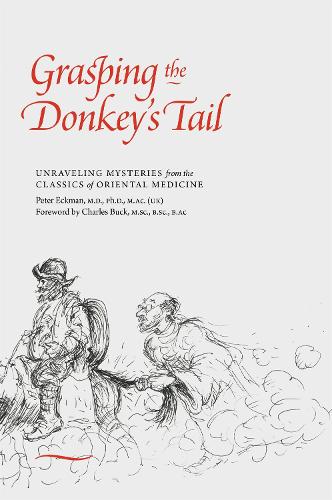
Книга Grasping the Donkey's Tail: Unraveling Mysteries from the Classics of Oriental Medicine
Exploration and interpretation of key questions in classical Chinese medicine
A scholarly yet practical account for modern clinicians of some of the key difficult questions arising from obscure passages in the classics of Chinese medicine. This book offers an interpretation of crucial sections from the classical Chinese texts which have continued to puzzle Western clinicians, and serves as a basis for more effective acupuncture treatments.
The author discusses Sasang medicine interpretations of specific phenomena, showing where Korean medicine diverged from Chinese, and how the two traditions can inform each other, and the modern acupuncturist. Elsewhere, he discusses the Daoist roots of Chinese medicine, the fundamental differences between Oriental and Western medical approaches, as well as various important issues in pulse diagnosis, all of which have practical application for modern clinicians and students.
"The book's essence, distilled into a single word, is 'resonance', its aim being to shed new light on old wisdoms contained in the classics of Chinese medicine...This latest offering is a slim volume but offers big, practice changing ideas for those in the profession...Although the volume is lightweight, it packs a lot of information and the many footnotes show just how thorough the author has been with his research. No stone is left unturned in pursuit of what the ancients were intending to convey. I loved how his observations and theories are soundly backed up with clinical experience...This is a delightfully ambitious book that you will want to read more than once." - Acu, Issue 16, Autumn 2017
"An innovative and essential text for acupuncturists and Chinese medicine students and practitioners...It is a book to come back to, to reflect on, to inspire one's own research and investigation. Grasping the Donkey's Tail raises questions about the nature of health, disease, acupuncture and the human's place between Heaven and Earth, that will be interesting for practitioners of any style of acupuncture who are interested in how the classics can be relevant for contemporary practice." - The Journal of Chinese Medicine