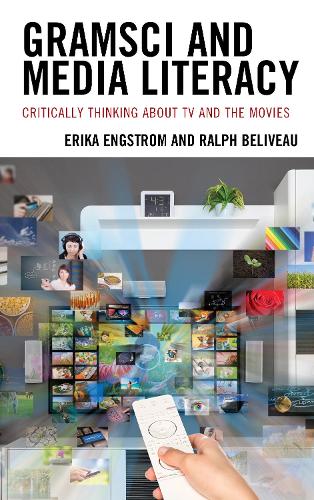
Gramsci and Media Literacy: Critically Thinking about TV and the Movies offers a series of contemporary media analyses that use Antonio Gramsci’s theory of hegemony to explore how dominant ideologies in media delivery, historical storytelling, and gender in today’s mass media environment become the commonsense viewpoints that maintain power structures in civil society. Through a media literacy approach, case studies of ideological delivery through television and film illustrate why Gramscian media theory serves as a valuable tool for revealing the many ways hegemonic thought operates in the media sphere and in everyday life, and they offer hope for counterhegemonic understandings.
"
Gramsci and Media Literacy is grounded in three key concepts—hegemony, media literacy, and semiotics—in the pursuit of demonstrating how the study of Gramsci is still relevant in mass media studies. Co-authors Erika Engstrom, professor and director of the School of Journalism and Media at the University of Kentucky, and Ralph Beliveau, associate professor of Creative Media Production at the University of Oklahoma, apply a Gramscian/hegemonic lens to the disciplines of cultural studies, media studies, education studies, and gender studies that coalesce quite nicely as the book progresses.
" - Journalism & Mass Communication Quarterly