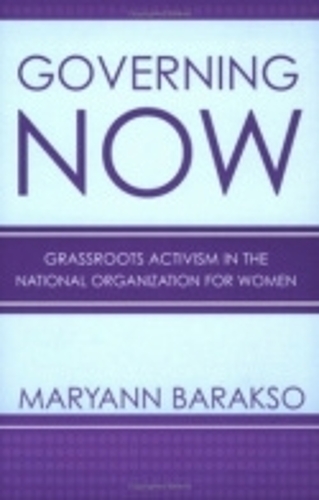
Книга Governing NOW: Grassroots Activism in the National Organization for Women
Boasting more than five hundred thousand contributing members and five hundred chapters nationwide, the National Organization for Women has been politically active for more than thirty-five years. In a book that offers tools for predicting the long-term viability of a range of organizations, Maryann Barakso traces the political development of NOW. According to Barakso, NOW's activities and the stances it has taken throughout its history have been shaped primarily by the organization's internal political system. Established during the group's founding period, NOW's governance structure consists of a set of principles and institutional rules that continue to guide the group's internal political dynamics and its decision-making.
Focusing on interactions between NOW leaders and rank-and-file members, Barakso reveals how the organization's internal structure affects its development and its participation in the wider political arena. The author also reveals why strategic change has always been such a contentious issue for the organization, the ways in which NOW enhances civic and political engagement, and the limits on NOW's future mobilizing capacity.
Governing NOW contributes to a deeper understanding of membership-based voluntary associations: why they choose some goals and tactics over others, why they invest resources as they do, and why they join or abstain from coalition politics.
"
Barakso has written a brief and accessible history of the National Organization for Women (NOW), the first group of the 'second wave' of feminism and still the primary women's movement association.... The heart of the book focuses on almost 40 years of national politics and players within the organization. Recommended for large public libraries and academic libraries.
" - Library Journal"
Barakso takes a measured approach to her analysis, neither overly praising the NOW leadership for adhering to founding principles, nor chastising them for slavish adherence to ideals that may have compromised the organization's ability to react to changing circumstances. Recommended.
" - Choice"
Barakso's data sources are impressive, including documents from the national NOW archives, interviews with a small stratified sample of NOW leaders and members, and participant observation at NOW conferences.... I find Barakso's depiction of NOW as being more complicated that a cookie-cutter liberal feminist organization convincing and her argument about the impact of governance structure an important return to earlier approaches focusing on internal movement processes.... The book has much to offer both social movement scholars and scholars interested in the women's movement from a variety of disciplinary and interdisciplinary perspective.
" - Mobilization