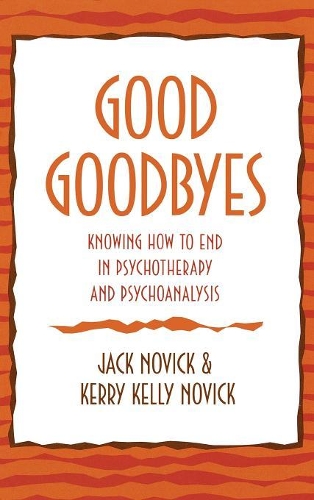
Книга Good Goodbyes: Knowing How to End in Psychotherapy and Psychoanalysis
Life is full of comings and goings, helloes and goodbyes, meetings and partings. Good Goodbyes highlights the crucial importance of how the end of therapy is structured and experienced. Bad endings can destroy good therapies. Good endings can consolidate the work accomplished, transform relationships, and foster growth in both patient and therapist. Within the framework of the therapeutic relationship and a clearly articulated set of goals for therapy, Jack Novick and Kerry Kelly Novick describe how to recognize and respond to termination themes from the very beginning of treatment. Each phase of treatment brings its own challenges, as well as the risk of premature ending by patient or therapist. Each chapter in this book addresses specific danger signals to look out for and helpful techniques to support treatment. With vivid clinical examples from all diagnostic groups and all stages of development, the Novicks demonstrate how to engage each patient in building the "emotional muscle" needed to master life's challenges, transform early losses, and integrate new experiences of joy and sadness into the personality.
"Jack and Kerry Kelly Novick have written a very interesting book that grapples with the difficult issue of termination. I highly recommend this book to both beginning and advanced therapists and analysts. It will give them many ideas about many different ways to think about termination." - Psychologist-Psychoanalyst
"Deciding when to end clinical therapy and how to end it well can be a mystifying process. In Good Goodbyes: Knowing How to End in Psychotherapy and Psychoanalysis, Jack Novick and Kerry Kelly Novick share insights from their vast combined experienceto diminish the mystery of therapeutic closure. The book, which is firmly based in psychoanalytic theory, uses a question format to explore the many hows, whys, whats, and whens of termination. The authors outline treatment stages along the path to the therapeutic conclusion, all the while fine-tuning a constructive approach for supplying the good in goodbye. As psychoanalysts, teachers, and supervisors, the Novicks bring a refreshing perspective to ?endings, beginnings, and the work needed for a goodgoodbye? (p. xi), filling in gaps not previously addressed. The layout is especially helpful for locating information to apply in practice settings. Fortunately, each chapter includes illustrations that allow practitioners with little training in psychoanalysis to understand key concepts without a deep grounding in psychoanalytic theory. Some of the new insights into termination do generalize across theoretical orientations. Although it is comprehensively psychoanalytic, Good Goodbyes presen" - PsycCRITIQUES
"Deciding when to end clinical therapy and how to end it well can be a mystifying process. In Good Goodbyes: Knowing How to End in Psychotherapy and Psychoanalysis, Jack Novick and Kerry Kelly Novick share insights from their vast combined experience to diminish the mystery of therapeutic closure. The book, which is firmly based in psychoanalytic theory, uses a question format to explore the many hows, whys, whats, and whens of termination. The authors outline treatment stages along the path to the therapeutic conclusion, all the while fine-tuning a constructive approach for supplying the good in goodbye. As psychoanalysts, teachers, and supervisors, the Novicks bring a refreshing perspective to “endings, beginnings, and the work needed for a good goodbye” (p. xi), filling in gaps not previously addressed. The layout is especially helpful for locating information to apply in practice settings. Fortunately, each chapter includes illustrations that allow practitioners with little training in psychoanalysis to understand key concepts without a deep grounding in psychoanalytic theory. Some of the new insights into termination do generalize across theoretical orientations. Although it is comprehensively psychoanalytic, Good Goodbyes presents a solid contribution to understanding the process of properly ending psychotherapy. Applying the lessons set forth in this text will enhance the long-term positive changes that are possible through effective psychotherapy." - PsycCRITIQUES