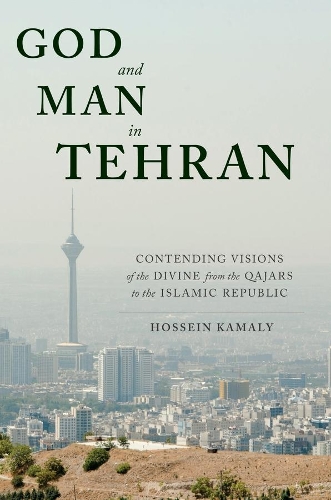
In God and Man in Tehran, Hossein Kamaly explores the historical processes that have made and unmade contending visions of God in Iran's capital throughout the past two hundred years. Kamaly examines how ideas of God have been mobilized, contested, and transformed, emphasizing how notions of the divine have given shape to and in turn have been shaped by divergent conceptualizations of nature, reason, law, morality, and authority. God and Man in Tehran analyzes official government policies, modern textbooks, and university curricula; popular beliefs and ritual practices; and philosophical and juridical attitudes toward theological questions in traditional institutions. Kamaly considers continuity and change in religiosity under the Qajar and Pahlavi dynasties; the significance of outbreaks of messianic expectations; why a modernizing nation took a sudden turn toward state religiosity; and how the Islamic Republic deploys visions of God against foreign enemies and domestic critics.
Beyond the majority Shia Muslim population, the book includes minority and suppressed voices, discussing the views of Sunni Muslims, Armenian and Assyrian Christians, Jews, Baha'is, and Zoroastrians and investigating issues of gender and class. With a focus on the diversity of ideas of the divine, God and Man in Tehran offers a novel perspective on the intellectual movements that have shaped Iranian modernity.
"A truly admirable synthesis of intellectual and religious history." - Journal of Religious History
"The book is well written and researched, and will be an important resource for those interested in Islam in Iran." - Choice
"Hossein Kamaly's new book God and Man in Tehran represents a major event that should be and can be read profitably by those wishing to make sense of the intellectual roots of modern Iran as well as working through the dynamics and complexities of the Safavid period." - Hikmat: Texts
"God and Man in Tehran is undoubtedly a valuable contribution to Iranian Studies." - Reading Religion