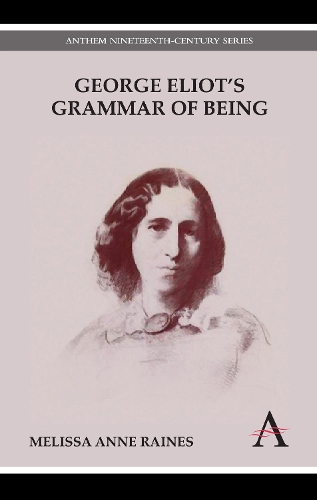
Книга George Eliot's Grammar of Being
A study of the meticulous writing process of George Eliot, drawing on original manuscripts and Victorian psychological theory.
George Eliot’s writing process was meticulous in all of its phases, from manuscript to published text. Each of her extensive novels has a delicately crafted syntax, for she shaped her individual sentences as carefully as she wanted her public to read them. Building on the influence of Victorian psychological theory, this book explains how George Eliot consciously created subtle shocks within her grammar—reaching out to her readers beneath the levels of character and story—in her effort to inspire sympathetic response.
In the opening chapter of her 1866 novel 'Felix Holt', George Eliot tells her readers that the 'vibrations that make human agonies are often a mere whisper in the roar of hurrying existence'. 'George Eliot's Grammar of Being' is developed from the idea that George Eliot wanted to produce these vibrations within her novels, not just at the level of story and character, but also at the level of language. She was a novelist who wanted the public to read her sentences almost as carefully as she wrote them—to make her readers find and subconsciously respond to those places in the prose where the syntax itself delivers subtle shocks to the system 'beneath' context. Relying heavily on examination of original manuscripts and page proofs, this book shows how George Eliot’s is a carefully evolved grammar where the vibrations are purposefully created and then enhanced through active revision. Drawing on the influence of Victorian psychological and neuro-physiological theory, as well as study of the manuscripts and writing processes of other Victorian novelists, the book shows how the sentences within a novel can become a kind of nervous system to the narrative, thus highlighting the integral role that language plays in the inspiration of our sympathy as readers.