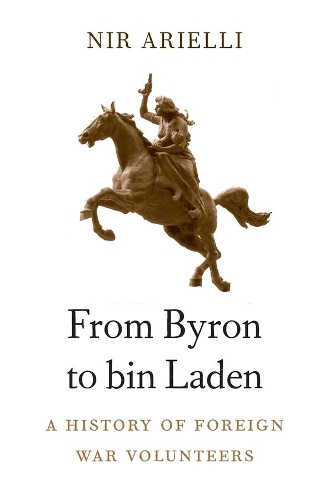
Книга From Byron to bin Laden: A History of Foreign War Volunteers
What makes people fight and risk their lives for countries other than their own? Why did diverse individuals such as Lord Byron, George Orwell, Che Guevara, and Osama bin Laden all volunteer for ostensibly foreign causes? Nir Arielli helps us understand this perplexing phenomenon with a wide-ranging history of foreign-war volunteers, from the wars of the French Revolution to the civil war in Syria.
Challenging narrow contemporary interpretations of foreign fighters as a security problem, Arielli opens up a broad range of questions about individuals’ motivations and their political and social context, exploring such matters as ideology, gender, international law, military significance, and the memory of war. He shows that even though volunteers have fought for very different causes, they share a number of characteristics. Often driven by a personal search for meaning, they tend to superimpose their own beliefs and perceptions on the wars they join. They also serve to internationalize conflicts not just by being present at the front but by making wars abroad matter back at home. Arielli suggests an innovative way of distinguishing among different types of foreign volunteers, examines the mixed reputation they acquire, and provides the first in-depth comparative analysis of the military roles that foreigners have played in several conflicts.
Merging social, cultural, military, and diplomatic history, From Byron to bin Laden is the most comprehensive account yet of a vital, enduring, but rarely explored feature of warfare past and present.
"A highly topical book as we contemplate the return of Islamist fighters following Islamic State’s defeat in Syria. It is also meticulously researched. Nir Arielli has drawn on a wealth of source material to look at the phenomenon of ‘foreign fighters’ from every conceivable angle… Superb." - International Affairs
"This is a fascinating book, at times a very literary survey of the history of foreigners in military service, and their motivation." - The Spectator
"A greatly insightful work that deserves its place on any war studies reading list. And those who worry about radicalized youths would do well to seek an understanding of their motivations from the many colorful examples that Arielli has harvested from the vast literature he has drawn upon for this brilliant study." - American Historical Review
"An immensely ambitious project…Its achievement lies not in providing the last word on foreign war volunteering, but in suggesting a convincing range of frameworks in which comparisons can usefully be made across contexts. This is an indispensable resource for scholars of contemporary and historical foreign war volunteering alike, and will shape new research directions for some time to come." - Journal of Contemporary History
"The book is well researched, and the author’s detailed exploration of diverse fighting groups led by both revered and reviled historical figures…proves conclusively that there remains no single motivation for foreign volunteers to take up arms during wartime…Succeeds spectacularly in providing a detailed and insightful account of foreign war volunteering from the sixteenth century to the present." - H-Net Reviews