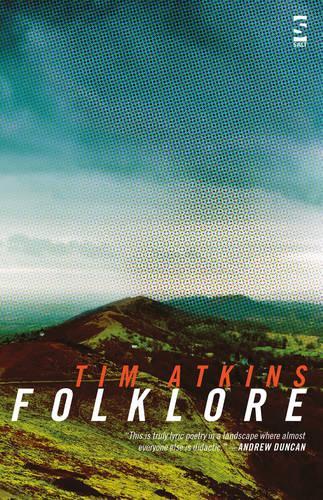
Книга Folklore
Stretching from Anglo-Saxon fragments, through the Shakespeare of Midsummer Night’s Dream, the ecstatic lyrics of John Clare, elegiac minimalism of AE Houseman, and contemporary work of Geoffrey Hill Folklore is a poetic sequence which extends, challenges, and continues the tradition of writing about the English countryside.
In this ecstatic, dreamlike, and starkly realist poem sequence set in and around the Malvern Hills in Worcestershire, the poet is discovered through the voices of all that surround him; giving truth to the French poet Rimbaud’s claim that “I is an other”.
In Folklore the poet is made by love of language as much as by the external world, and it is by singing through the unknown self and the unfamiliar world that identity – always fleeting, always peculiar, always ecstatic – is born: these poems are far from simple and bucolic. They echo the language and concerns of the aforementioned writers while at the same time playing with the innovative and modern poetic breakthroughs of the likes of Gertrude Stein and James Joyce. They are poems of living language, which are constantly in a state of becoming and redefining the possibilities of both word and Worcestershire world order.
Folklore speaks of a world that is both global and local. It is the world of the imagination and the world of the evolving English countryside. It is a work where the geography of the imagination is as vibrant as the one before the author’s eyes; and the one beneath his feet.
Stretching from Anglo-Saxon fragments, through the Shakespeare of Midsummer Night’s Dream, the ecstatic lyrics of John Clare, elegiac minimalism of AE Houseman, and contemporary work of Geoffrey Hill Folklore is a poetic sequence which extends, challenges, and continues the tradition of writing about the English countryside.
In this ecstatic, dreamlike, and starkly realist poem sequence set in and around the Malvern Hills in Worcestershire, the poet is discovered through the voices of all that surround him; giving truth to the French poet Rimbaud’s claim that “I is an other”.
In Folklore the poet is made by love of language as much as by the external world, and it is by singing through the unknown self and the unfamiliar world that identity – always fleeting, always peculiar, always ecstatic – is born: these poems are far from simple and bucolic. They echo the language and concerns of the aforementioned writers while at the same time playing with the innovative and modern poetic breakthroughs of the likes of Gertrude Stein and James Joyce. They are poems of living language, which are constantly in a state of becoming and redefining the possibilities of both word and Worcestershire world order.
Folklore speaks of a world that is both global and local. It is the world of the imagination and the world of the evolving English countryside. It is a work where the geography of the imagination is as vibrant as the one before the author’s eyes; and the one beneath his feet.
"
At a time when so many poems read as unnecessary and under-motivated by-products of decidedly other careers, the guilelessness, amusement and scantily-clad affect of Atkins’ Horace is both a balm and a tonic. If Atkins were Horace, someone (Harry Gilonis? Chris Hamilton-Emery?) would have given him a villa well over 20 years ago.
" - The Poetry Project Newsletter