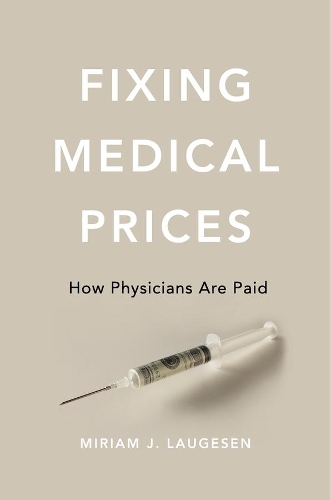
Книга Fixing Medical Prices: How Physicians Are Paid
Medical care prices in the United States are not only the most expensive in the world, but there are wide variations in what physicians are paid. Doctors at the frontlines of medical care who manage complex conditions argue that they receive disproportionately lower fees than physicians performing services such as minor surgeries and endoscopies. Fixing Medical Prices goes to the heart of the U.S. medical pricing process: to a largely unknown yet influential committee of medical organizations affiliated with the American Medical Association that advises Medicare. Medicare’s ready acceptance of this committee’s recommendations typically sets off a chain reaction across the entire American health care system.
For decades, the U.S. policymaking structure for pricing has reflected the influence of physician organizations. What Miriam Laugesen’s rich analysis shows is how these organizations navigate the arcane and complex work of this advisory committee. Contradicting the story of a profession in political decline, Fixing Medical Prices demonstrates that the power of physician organizations has simply become more subtle.
Laugesen’s investigation into the exorbitant cost of American medical care will be of interest to those who follow the politics of health care policy, the influence of interest groups on rate setting, and the medical profession’s past and future role in our health care system.
"Will people still care about these issues for the next four years? I hope so, because this is the best book I know of on Medicare pricing and its influence on pricing throughout the broader U.S. health care system." - Marginal Revolution
"In Fixing Medical Prices, Miriam Laugesen takes a deep dive into the weeds of U.S. medical pricing policy to uncover problems with how Medicare sets physician payments." - Health Affairs
"Fixing Medical Prices is a superb book on a subject—how Medicare determines what it pays physicians—that is both exceedingly complex and arcane, yet also critically important in terms of impacting the structure of health care finance, organization and delivery…The book should be required reading for health policy scholars, medical students, medical historians, and anyone interested in how money—in the form of Medicare payment policy—shapes U.S. health care." - Bulletin of the History of Medicine