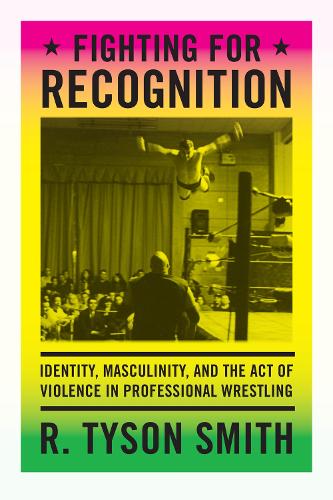
Книга Fighting for Recognition: Identity, Masculinity, and the Act of Violence in Professional Wrestling
In Fighting for Recognition, R. Tyson Smith enters the world of independent professional wrestling, a community-based entertainment staged in community centers, high school gyms, and other modest venues. Like the big-name, televised pro wrestlers who originally inspired them, indie wrestlers engage in choreographed fights in character. Smith details the experiences, meanings, and motivations of the young men who wrestle as "Lethal" or "Southern Bad Boy," despite receiving little to no pay and risking the possibility of serious and sometimes permanent injury. Exploring intertwined issues of gender, class, violence, and the body, he sheds new light on the changing sources of identity in a postindustrial society that increasingly features low wages, insecure employment, and fragmented social support. Smith uncovers the tensions between strength and vulnerability, pain and solidarity, and homophobia and homoeroticism that play out both backstage and in the ring as the wrestlers seek recognition from fellow performers and devoted fans.
"“Immensely readable and as vibrant in its energy as the subjects it seeks to present and understand, Fighting for Recognition focuses on young men who make their living in professional wrestling. . . . Highly recommended. All readers.” " - Choice
"“[A]n entertaining read that can be used in a sport or masculinities course, or any other context that explores the paradoxical aspects of identity construction.”" - Gender & Society
"Smith demonstrates the value of taking this subculture seriously; for a place where white, working-class men must always battle the fear of being seen as fake or soft offers us a truly powerful starting point for unpacking the tensions and internal contradictions of masculinity." - Men and Masculinities
"Smith has produced a highly readable and useful ethnography on the performance of independent professional wrestling. The book is invaluable to those working on performance and wrestling and develops theories of masculinity, physicality, and the labor of performance, which should find an audience even among those who might be less familiar with professional wrestling and its performance." - Theatre Journal
"This theoretically sophisticated, fine-grained study of the quotidian practices of the Indy wrestling circuit will be of interest to scholars of gender, sports, and U.S. culture. It is also accessibly written and an ideal length for use in undergraduate courses." - American Journal of Sociology
"By examining the bizarre and paradoxical world of this marginalised, quasi-sporting subculture, Smith produces an insightful account of contemporary, working class masculinity as a complex construct.... Fighting for Recognition is therefore sure to rank highly on the reading lists of scholars interested in men, combat sports and masculinity, and also fans of wrestling with an interest in what takes place behind the spectacular veneer of on-stage ‘sports entertainment’." - Gender & History
"In Fighting for Recognition, R. Tyson Smith crafts a sophisticated and readable ethnographic analysis of the experiences of the young men involved in independent ('indie') professional wrestling. . . . Researchers and instructors in sport studies, cultural studies, and performance studies will find significant value in Smith's analysis." - Canadian Journal of Sociology
"Fighting for Recognition will be of particular interest for gender scholars and cultural sociologists. Intellectually challenging yet extremely accessible, this book would be a great option for both undergraduate and graduate courses." - Contemporary Sociology
"Smith does an excellent job articulating the draw of pro wrestling to young men and why, through all the pain and sacrifice, they continue. Smith is superb at describing and setting up a scene. The book transports a reader into the ring, eliciting the sights, sounds and smells of the world of wrestling. . . . Fighting for Recognition is accessible, offering palatable and engaging discussion of wrestling. As pro wrestling and other combat sports lack critical study, this book represents a needed contribution to the literature of sport sociology." - International Review for the Sociology of Sport