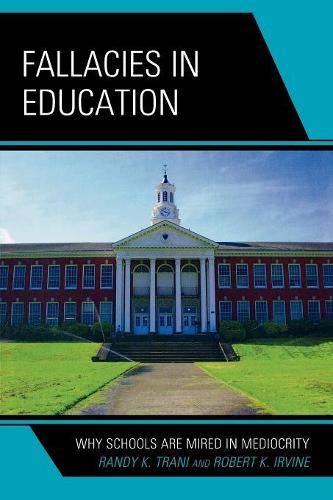
Книга Fallacies in Education: Why Schools Are Mired in Mediocrity
This book argues for a complete reassessment of the ways schools are conceived, organized, operated and managed. Authors Trani and Irvine challenge traditional assumptions about grade levels, teachers, students and administrators in pursuit of higher student achievement and academic excellence. Building on the methods that turned an average school district into one widely recognized as one of the best in the nation, this book argues for fundamental, logical changes to the way Americans operate their public schools. Fallacies in Education is purposefully written to support community-based changes to schools that encourage superior achievement and educational results. This book provides a pathway for concerned parents, administrators, teachers and citizens to improve their schools with their current resources. The techniques used in Corbett to produce an academic renaissance can be used everywhere and this book provides a starting point for schools to strive for academic achievement and excellence in education. The book demonstrates how every school can better serve their students and deliver a better education without increasing costs or incurring new ones.
"Trani and Irvine present a straightforward critique of US schools. The authors' position is based largely upon "common knowledge" views of what schools should be—how they should be organized, what they should accomplish, and how they should operate. These views, the authors say, are distortions that perpetuate school mediocrity. For example, they point out the problems with school size—believing that bigger is better; grade-level configuration—locking students into blocks by age and time; and middle school—placing students into complex schedules and surroundings at the time when they most need predictability. The authors present a strong argument for alternatives to this common knowledge. They delineate possibilities for funding and utilizing community resources to create excellent schools. Their suggestions for parents, teachers, school administrators, and board members are reasonable and full of promise. For example, become informed about school district needs and their limitations. Become an advocate, attend board meetings, speak up, ask questions, work to establish change. Achieving excellent schools entails facing skepticism and criticism because "common knowledge" views of schools are deeply imbedded in US culture and will take patience and perseverance to replace. Summing Up: Recommended." - CHOICE