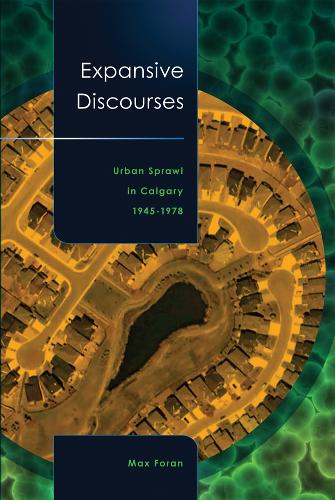
A groundbreaking study of how and why the interactions between localgovernment and land developers in Calgary after the Second World Warcreated a city that exemplifies urban sprawl.
This is a groundbreaking study of urban sprawl in Calgary after theSecond World War. The interactions of land developers and the localgovernment influenced how the pattern grew: developers met marketdemands and optimized profits by building houses as efficiently aspossible, while the city had to consider wider planning constraints andinfrastructure costs. Foran examines the complexity of theirinteractions from a historical perspective, why each party acted as itdid, and where each can be criticized.