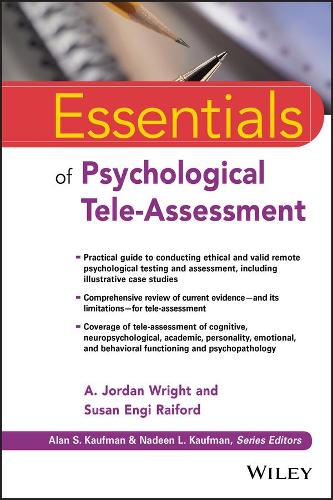
Книга Essentials of Psychological Tele-Assessment
Discover a comprehensive and practical guide to the use of tele-assessments in psychological testing from two leading voices in psychology.
Essentials of Psychological Tele-Assessment delivers a primer on the current state of professional knowledge related to psychological tele-assessment, ranging from the ethical and empirical considerations to the practical applications of tele-assessment procedures. The overarching framework encourages the balancing of the limitations of the current state of the research literature with the very real needs for assessment services to continue, even when in-person procedures are not feasible.
This book includes discussion on a broad range of tests and measures, with information related to both the state of the empirical support for tele-tests and measures, with information related to both the state of the empirical support for tele-assessment utilizing them and the practical 'how-to' for administering, scoring and interpreting data that emerge from them. Additionally, frameworks for integrating the data that emerge from tele-assessment procedures are discussed.
The book is applicable to those transitioning to tele-assessment practice and those training in a wide variety of training programs. Readers will also benefit from the inclusion of:
- Practical checklists and information about specific tests must be adapted to the realities of the tele-health environment.
- Information about how the results of tests should be interpreted differently to account for the tele-health environment.
- Case examples and studies to illustrate many of the challenges of working in tele-assessment
- Guidance on how to balance the limitations of the state of the empirical literature on the validity of tele-assessment with the real-world needs of clients.
Perfect for psychologists and trainees in a variety of health services, including clinical, counseling, school and forensic psychology, Essentials of Psychological Tele-Assessment will also earn a place in the libraries of anyone utilizing or training in cognitive, developmental, neuropsychological, psychoanalytic, psychodynamic, and interpersonal models of psychological assessment.
Vor etwa 10 Jahren erschien die Originalausgabe von Conducting Psychological Assessment. Seitdem wird dieses Referenzwerk, insbesondere in der Lehre, eingesetzt, um Psychologen in der Erstellung psychologischer Gutachten zu schulen, vor allem im Hinblick auf die Integration von Daten und das Abfassen von Berichten. Das in der Originalausgabe vorgestellte Hypothesentestmodell ist heute das Standardmodell für eine ethische und in jeder Hinsicht umfassende Begutachtung. Die 2. Auflage greift auf grundlegende Modelle der ersten Auflage zurück, ergänzt um Nuancen und Details, die in Workshops über die letzten zehn Jahre erarbeitet wurden. Der Autor hat anerkannte Modelle zum Abgleich widersprüchlicher Daten aus unterschiedlichen Quellen entwickelt, die in das Kapitel zur Datenintegration einfließen können. Auch nutzt der Autor verschiedene andere Modelle zur Persönlichkeitsfunktion als Vorlage für die Erarbeitung von Daten, darunter das interpersonelle Circumplex-Modell. Diese Ansätze kommen in diesem Buch durchgängig zur Anwendung.